✅ Receive up to 512 DMX channels.
✅ Your brand, your product — fully represented over RDM (chip remains transparent).
✅ I2C characteristics: 100 kHz, 400 kHz, 1 MHz; compatible with 3.3 V and 5 V microcontrollers.

✅ Receive up to 512 DMX channels.
✅ Your brand, your product — fully represented over RDM (chip remains transparent).
✅ I2C characteristics: 100 kHz, 400 kHz, 1 MHz; compatible with 3.3 V and 5 V microcontrollers.
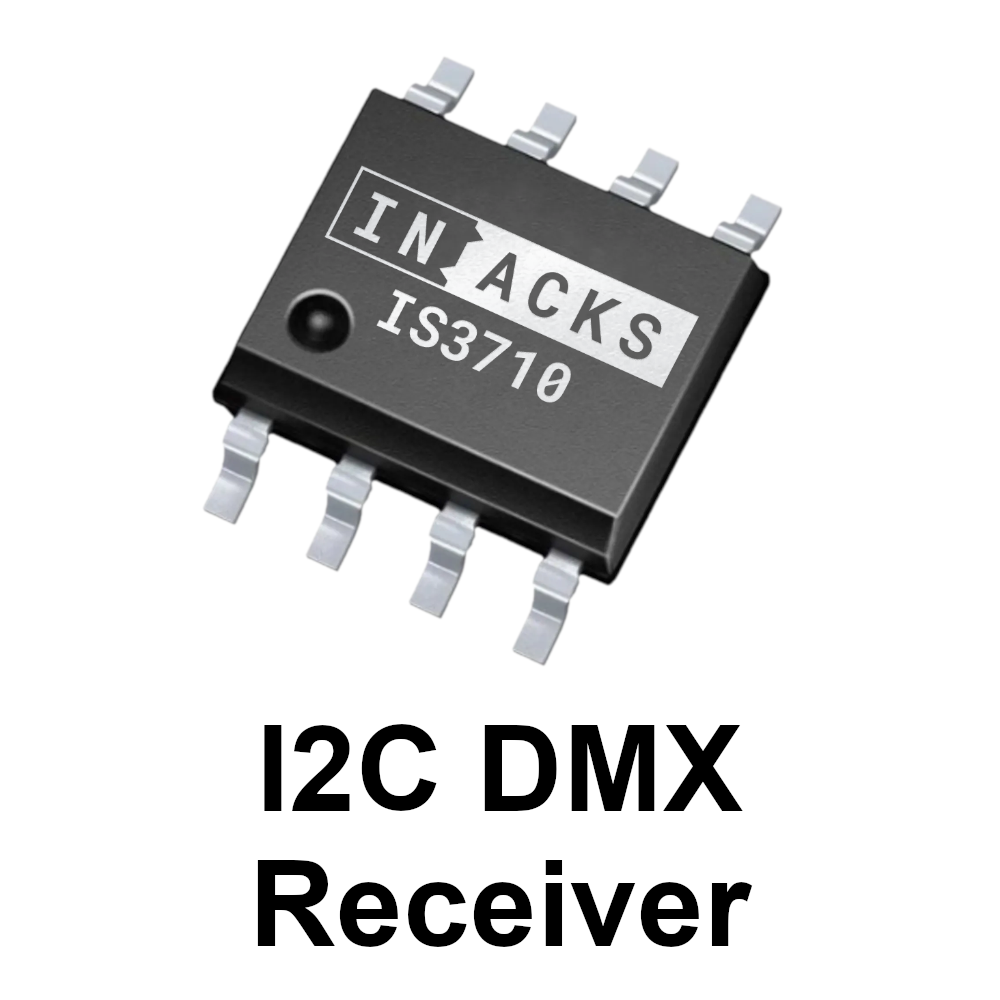
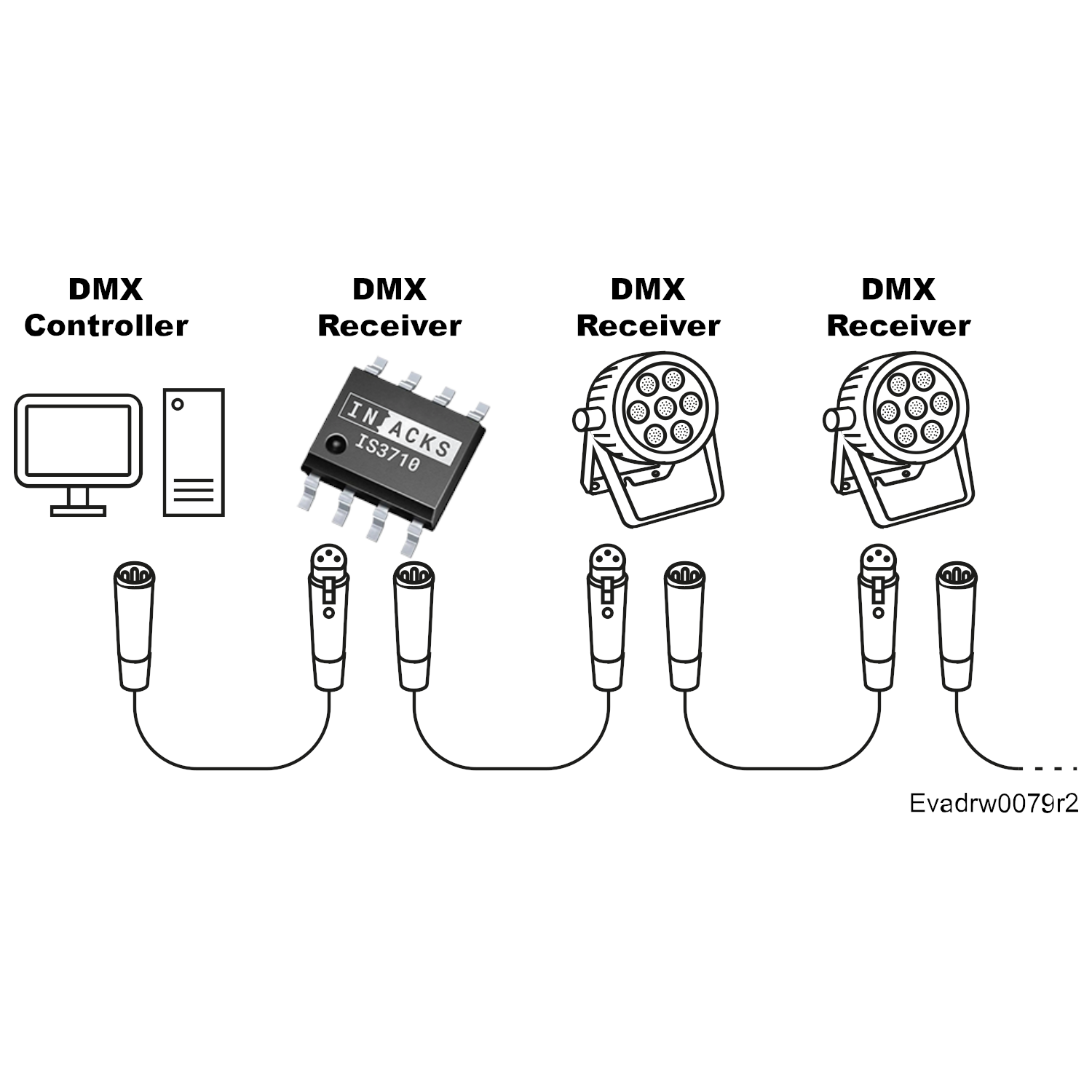
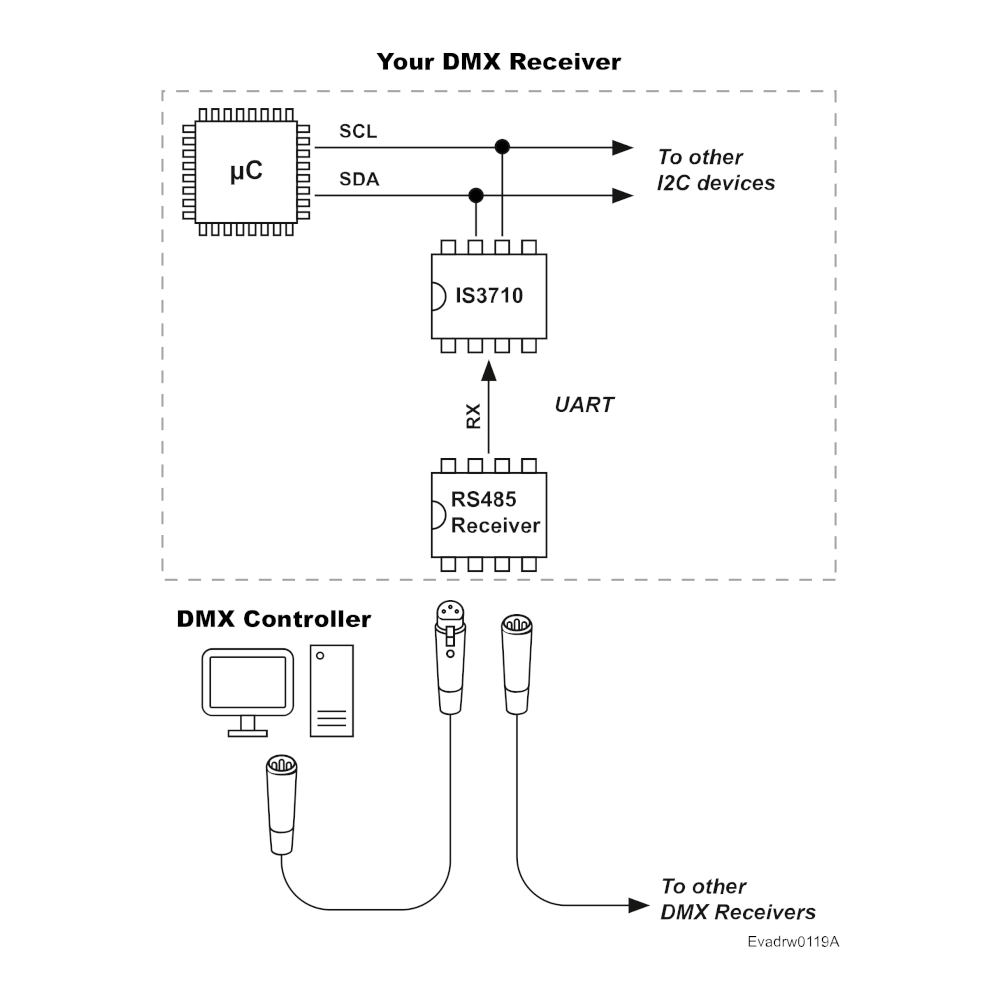
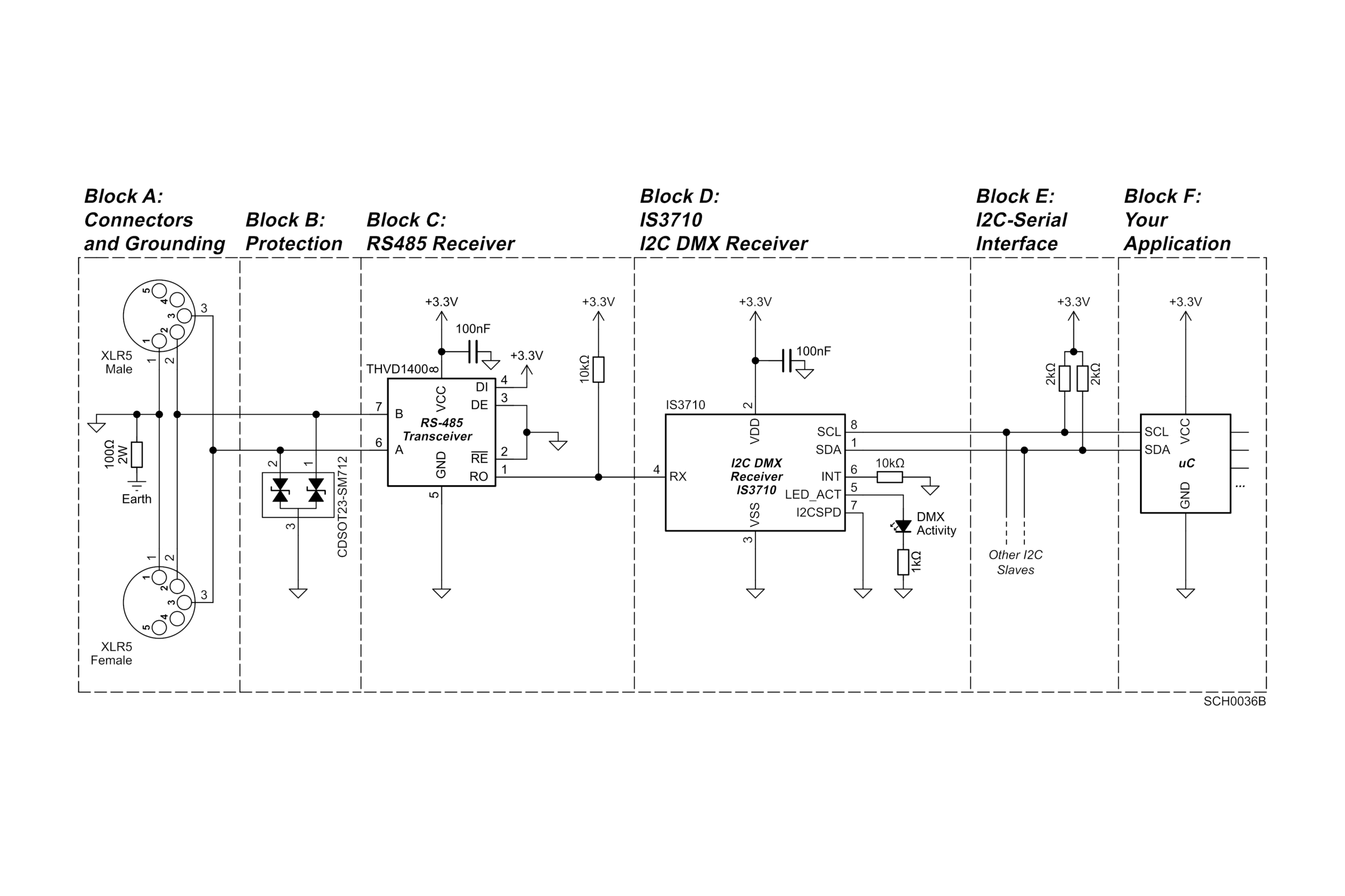
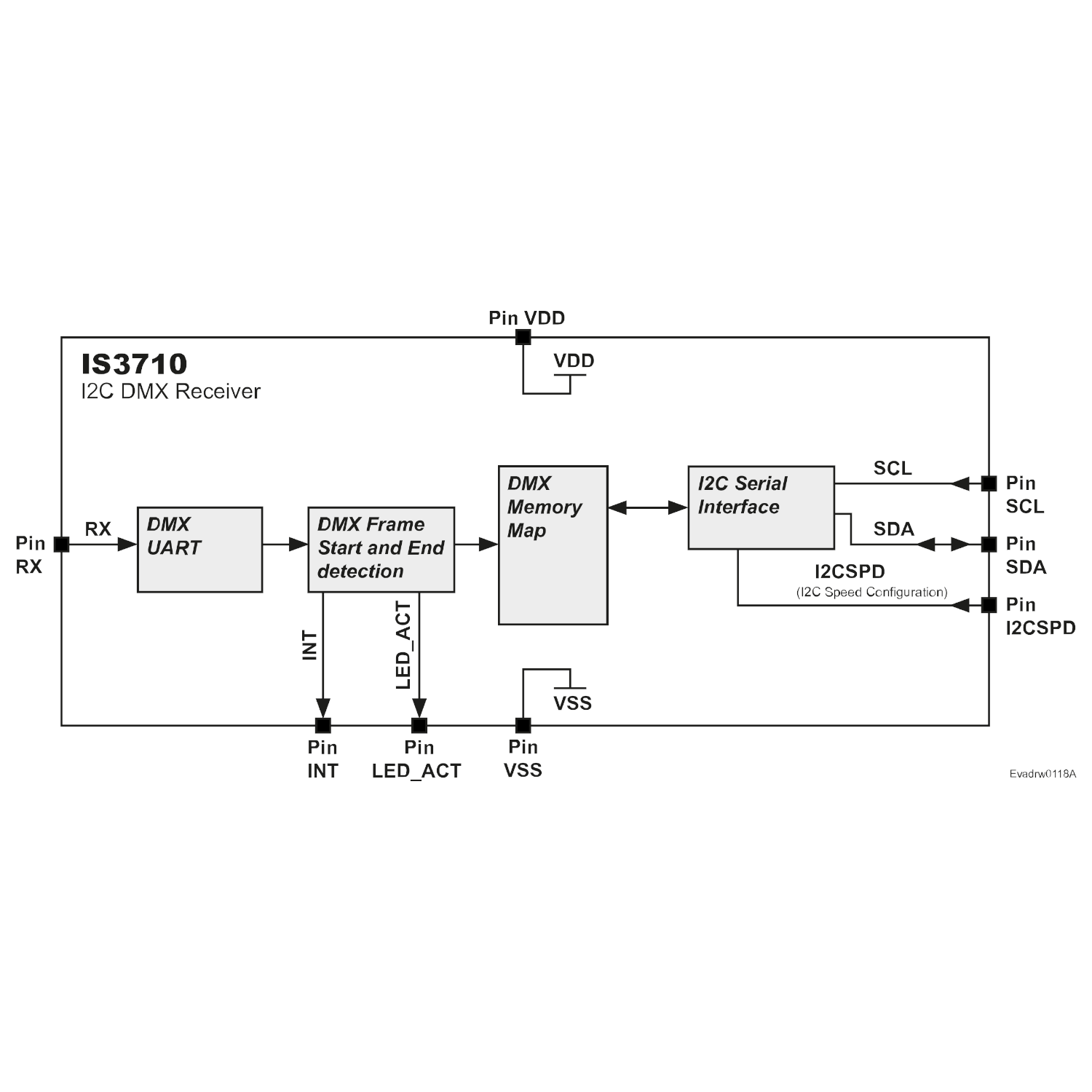
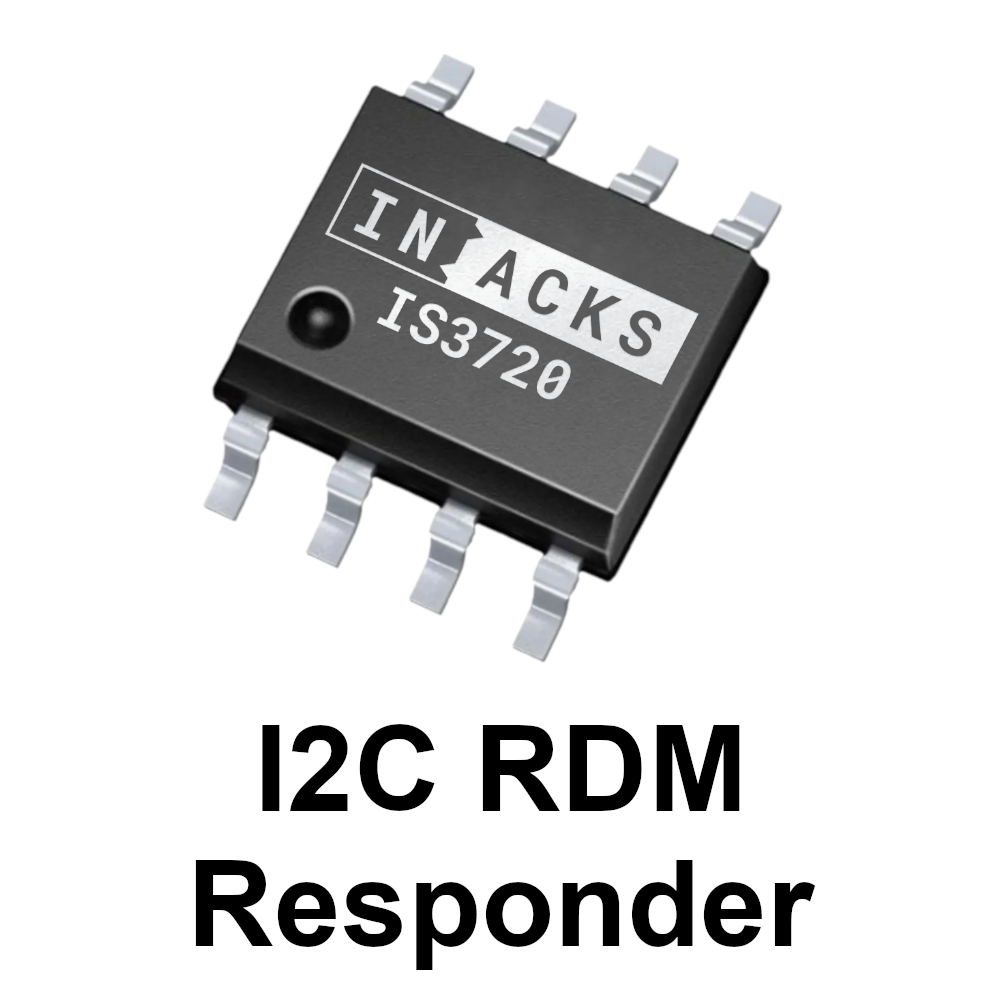
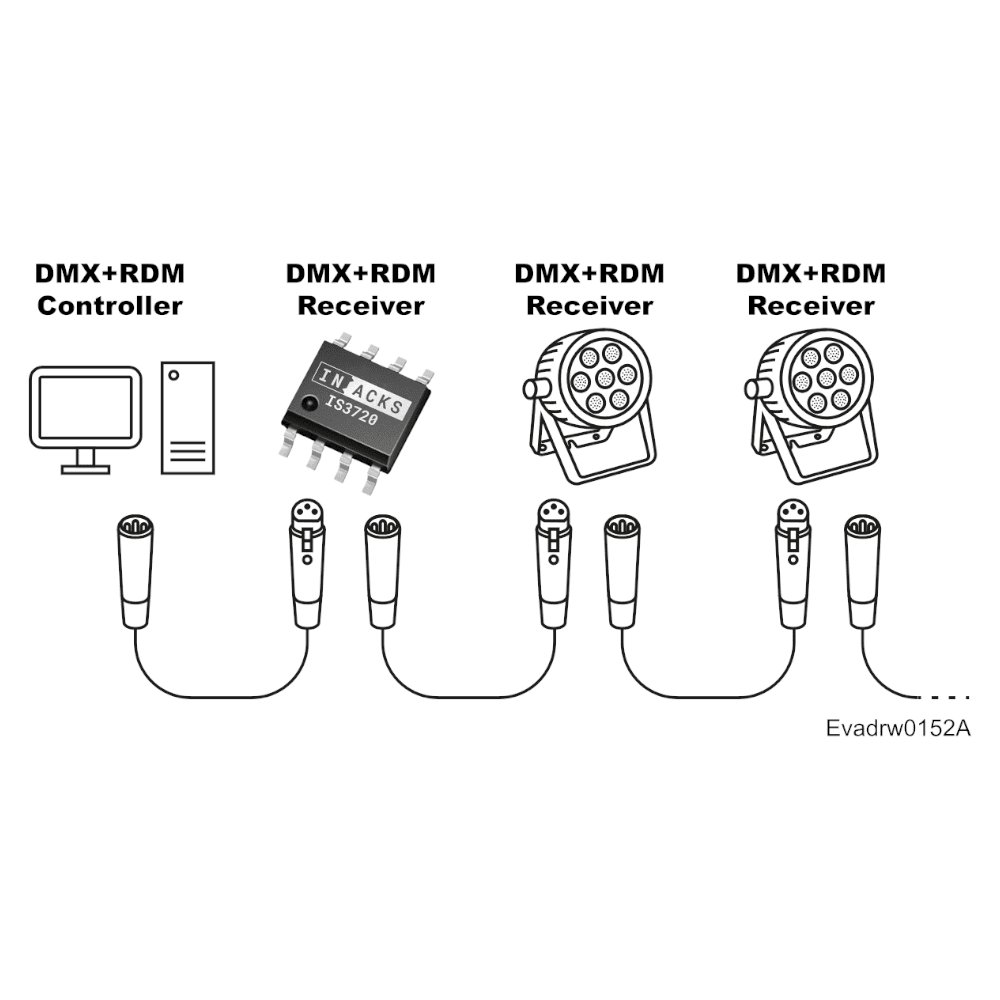
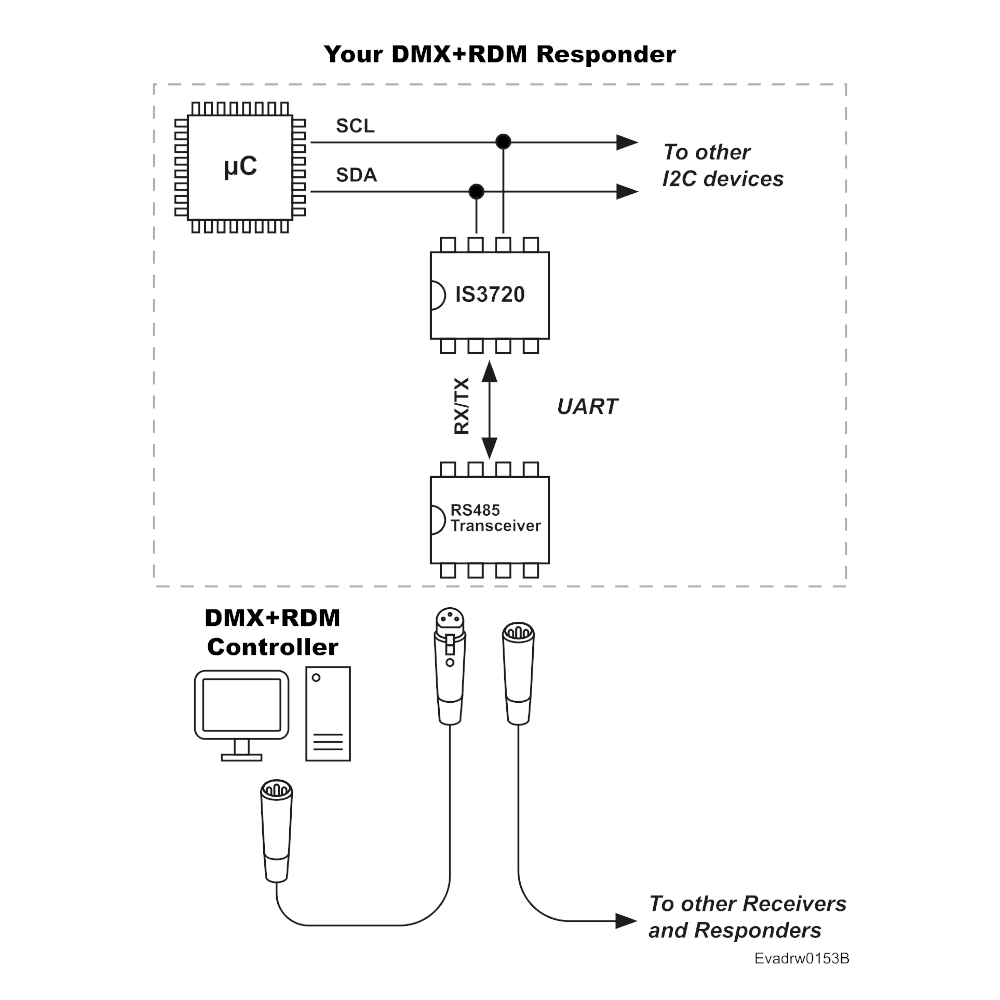
The IS3720 is a chip that integrates both DMX Receiver + RDM Responder protocols in a single IC. It buffers all 512 DMX channels in its internal memory map, which is accessible by your microcontroller via I2C.
The IS3720 also enables bidirectional communications through RDM, allowing remote configuration and management of your product. This eliminates the need for manual setup, such as physically adjusting the DMX start address.
RDM is especially helpful for light fixtures in large installations, such as building façade lighting, where an operator would otherwise spend significant time manually setting DIP switches on thousands of fixtures distributed across multiple floors and rooms.
It is also invaluable in installations where fixtures are embedded in the pavement or other sealed environments, like swimming pools or ornamental fountain where opening them would require breaking the ground or compromising waterproofing.
The IS3720 eliminates the need for engineers to learn and implement the low-level details of the DMX and RDM protocols. This significantly reduces development and testing effort, shortens time-to-market, and enables faster product release.
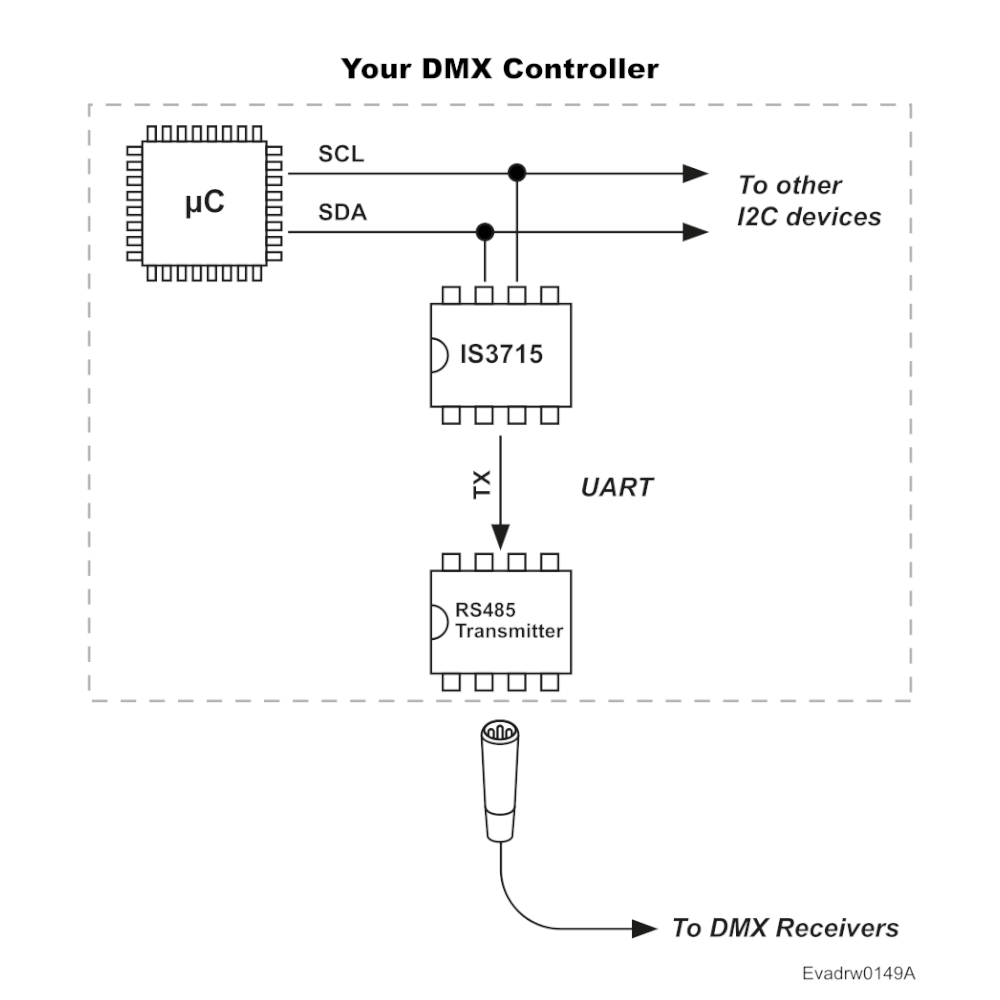
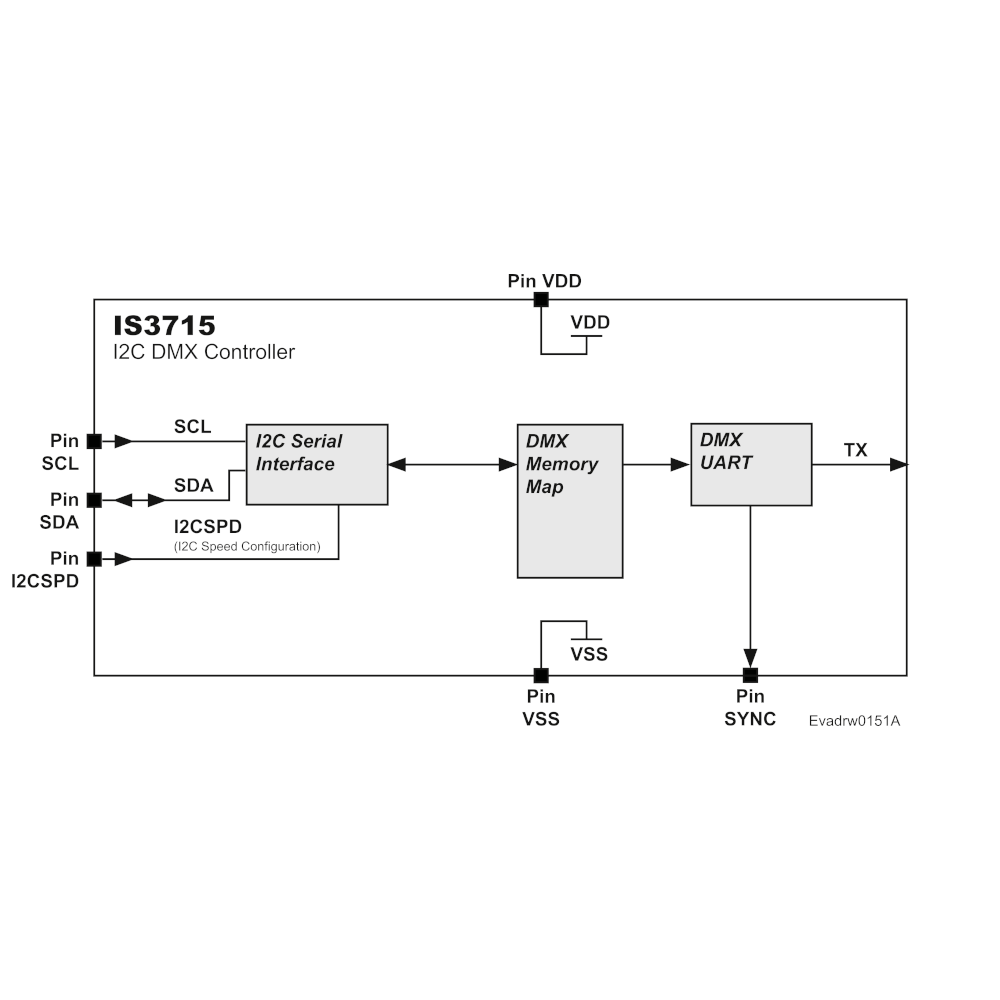
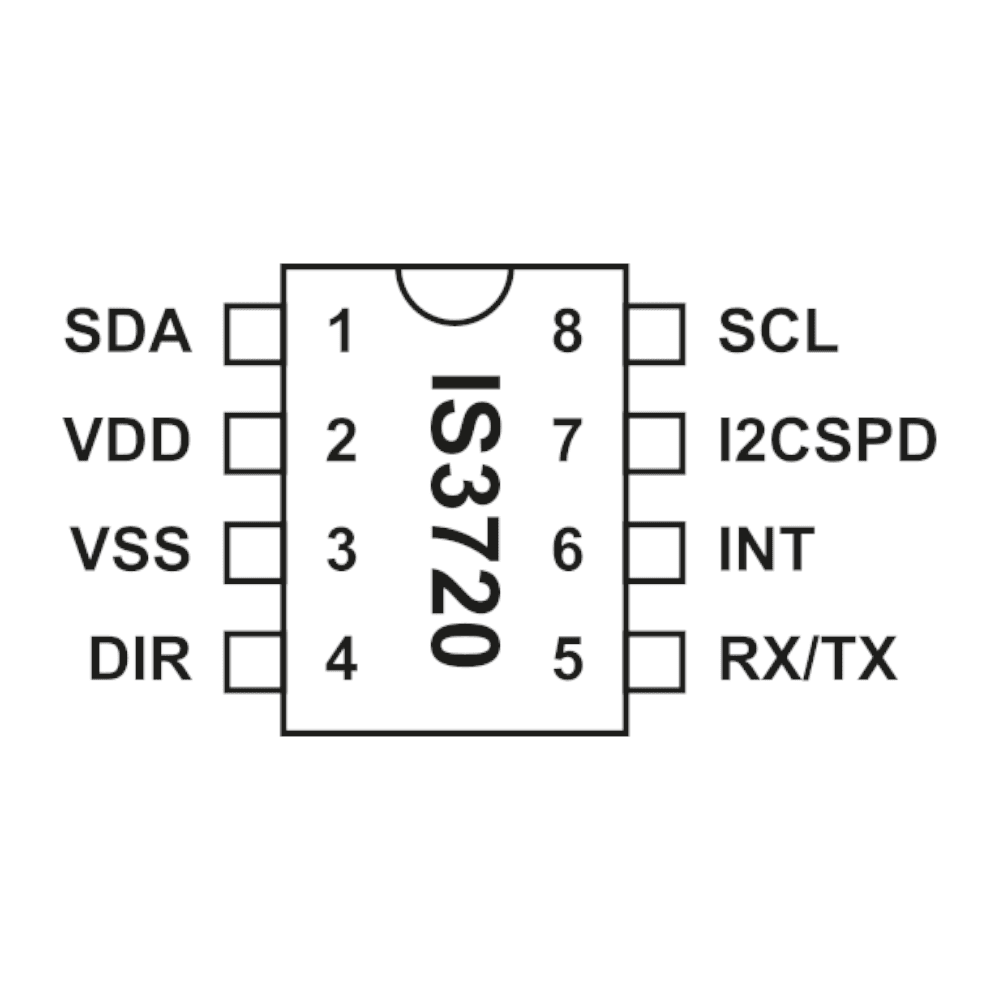
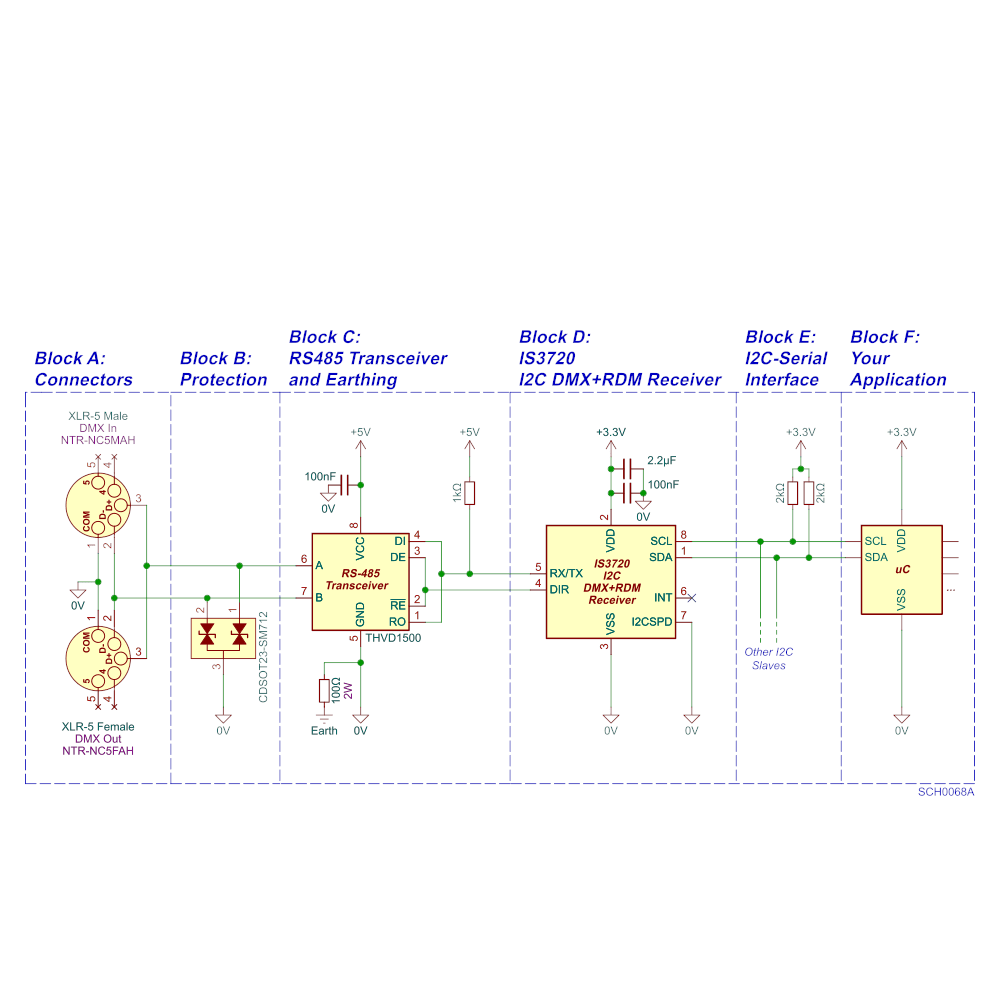
The IS3720 features two communication interfaces:
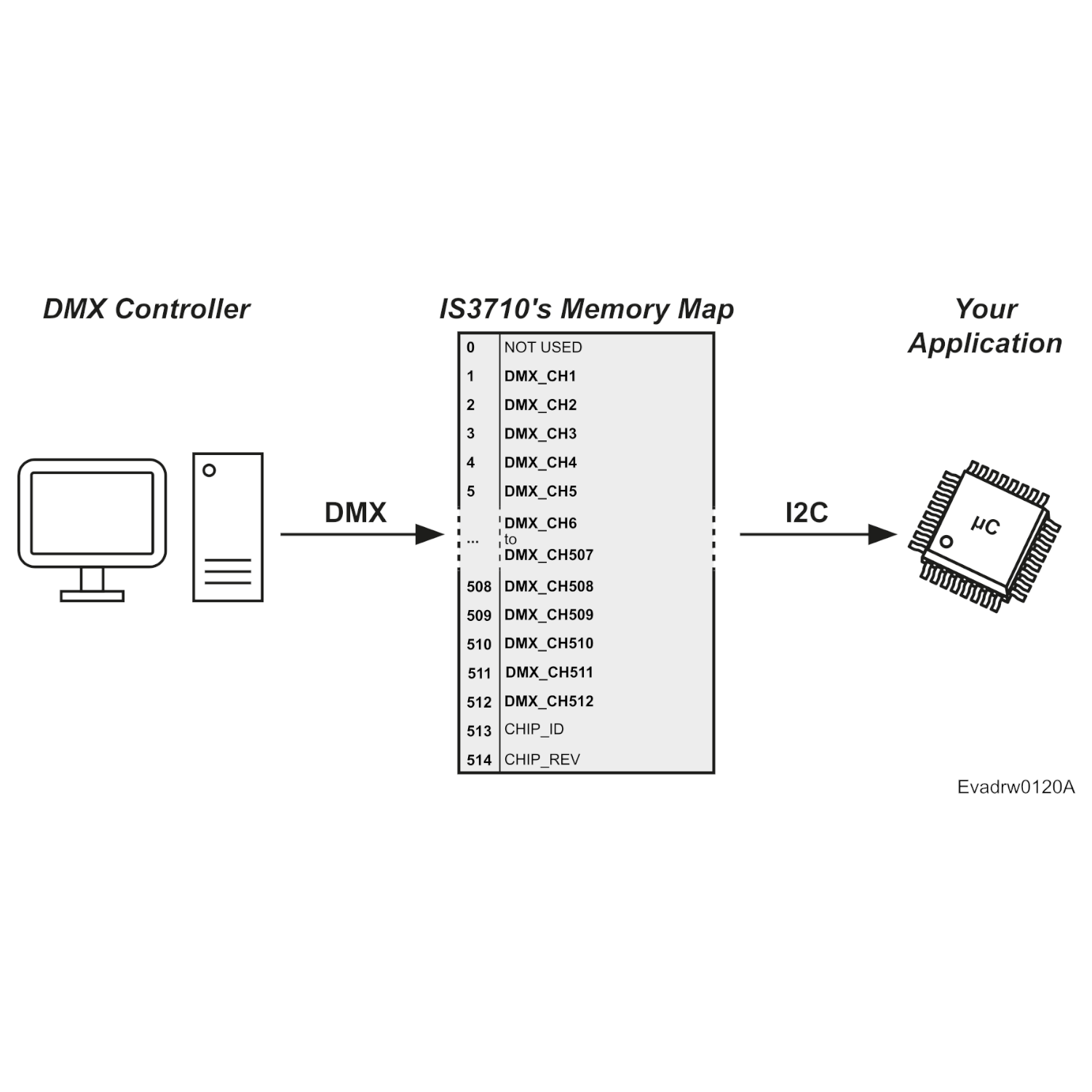
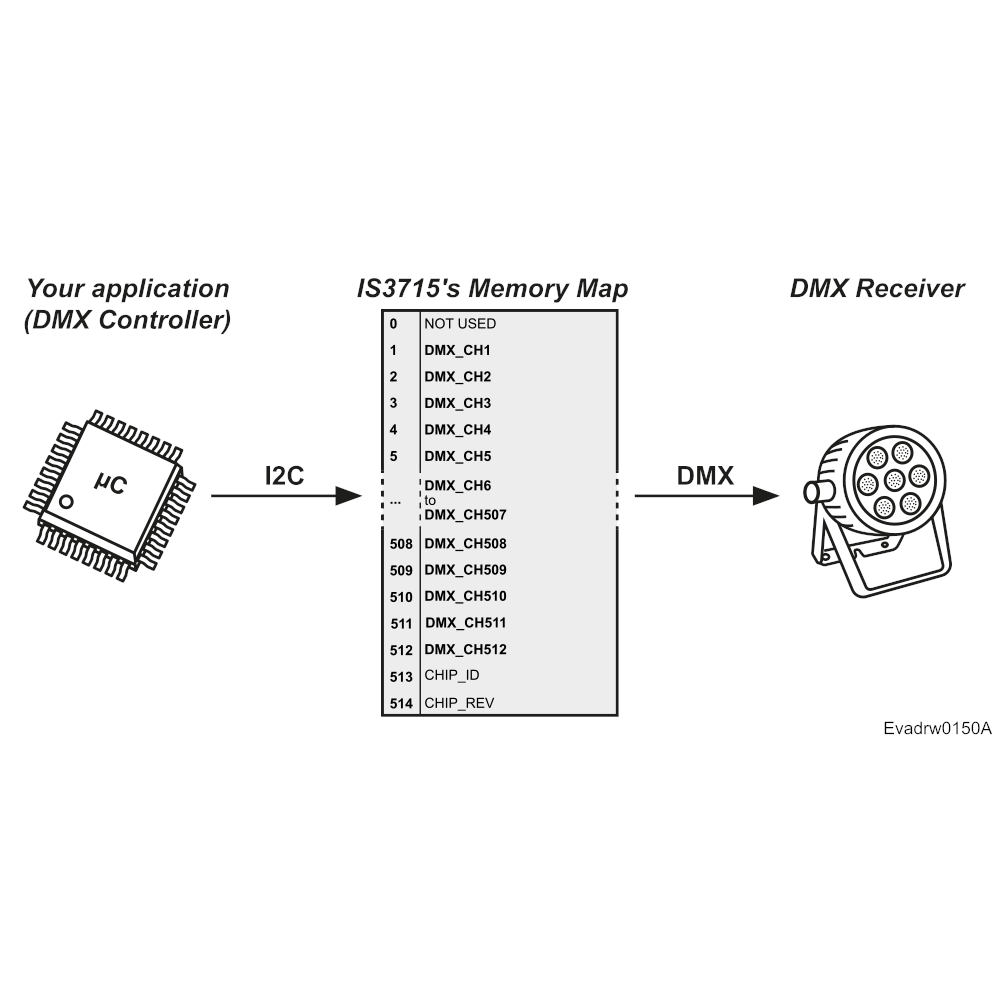
The IS3720 has an internal memory map consisting of 632 registers. Registers 1 to 512 correspond directly to DMX channel values. For example, reading register address 1 gets the value of DMX Channel 1, reading register address 512 reads the value of DMX Channel 512, covering the full range of channels.
RDM registers are mapped after the DMX registers. Some are informational, such as the MANUFACTURER_LBL register block, where you write via I2C your company name and it will show up on the RDM controller. Others are operational, such as the DMX_START_ADDRESS register block, which indicates the assigned DMX start address.
This company and the products provided herein are developed independently and are not affiliated with, endorsed by, or associated with any official protocol or standardization entity. All trademarks, names, and references to specific protocols remain the property of their respective owners.
Q: Which applications use the IS3720 chip?
A: It is typically used in professional lighting applications, including architectural and building lighting, stage and entertainment lighting, façade lighting, in-ground lighting, ornamental fountain lighting, difficult-access lighting, digital art installations, and animatronics. It is widely used by OEMs and device manufacturers.
Q: What are the main advantages of the IS3720 chip?
A: The IS3720 reduces engineering time and costs, shortens product time-to-market, and makes DMX and RDM protocols transparent to both the microcontroller and the engineer. It provides a low-cost solution with fewer ISRs, lower microcontroller CPU load, and reduced memory usage. It also saves microcontroller pins using I²C, minimizes the impact on peripherals (no need for dedicated timers, UART, etc.), and comes in a compact, easy-to-solder SO8N package.
Q: How many DMX channels can I receive with the IS3720 chip?
A: The IS3720 can receive from 1 up to 512 DMX channels.
Q: Which PIDs does the IS3720 chip support?
A: The IS3720 supports all PIDs required by the RDM standard ANSI E1.20-2010, plus the optional PIDs DEVICE_MODEL_DESCRIPTION, MANUFACTURER_LABEL, and SOFTWARE_VERSION_LABEL.