
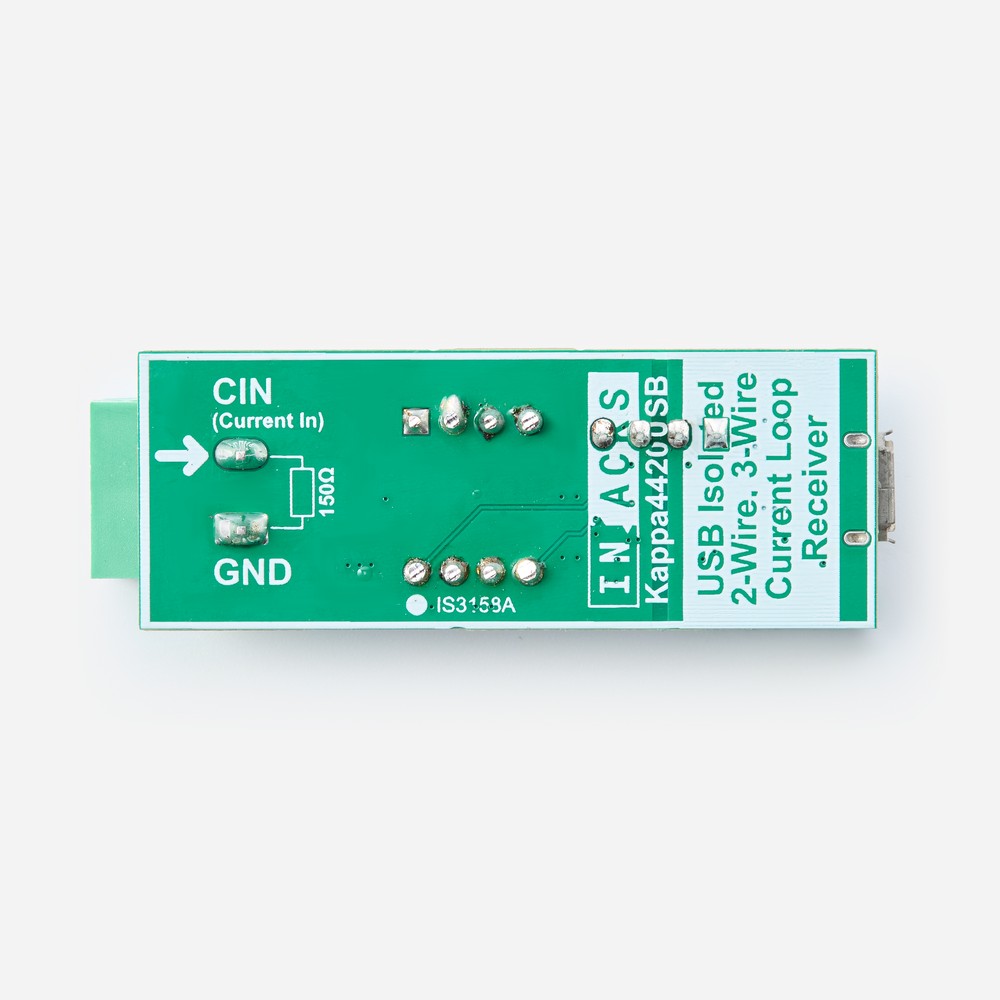
Isolated USB 4-20mA Receiver for Your PC
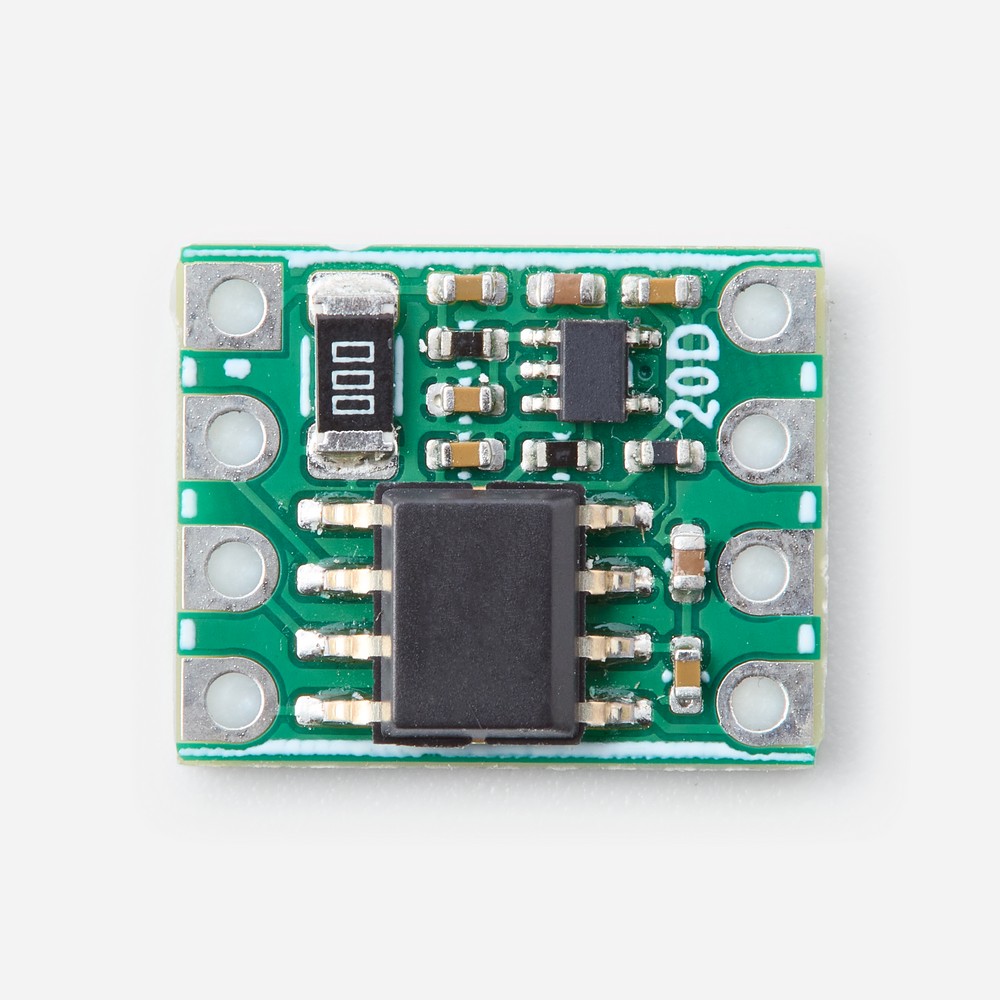
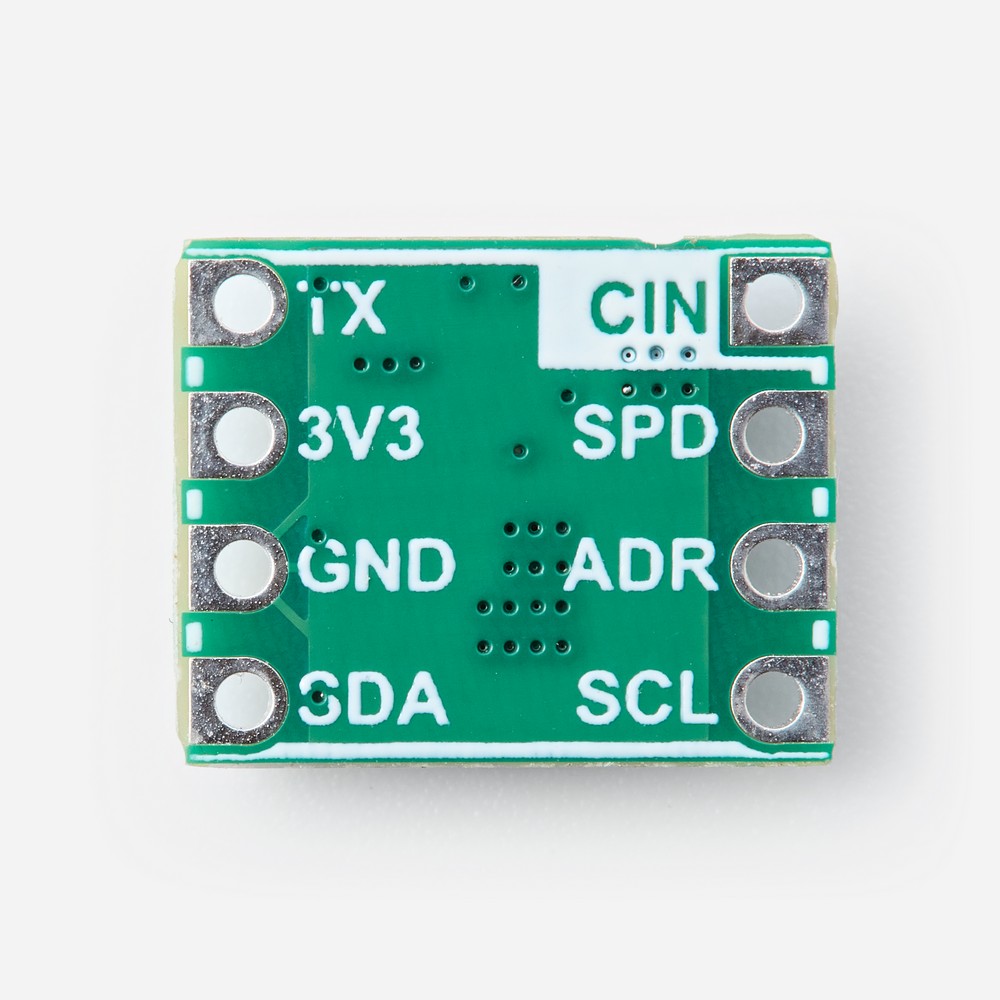
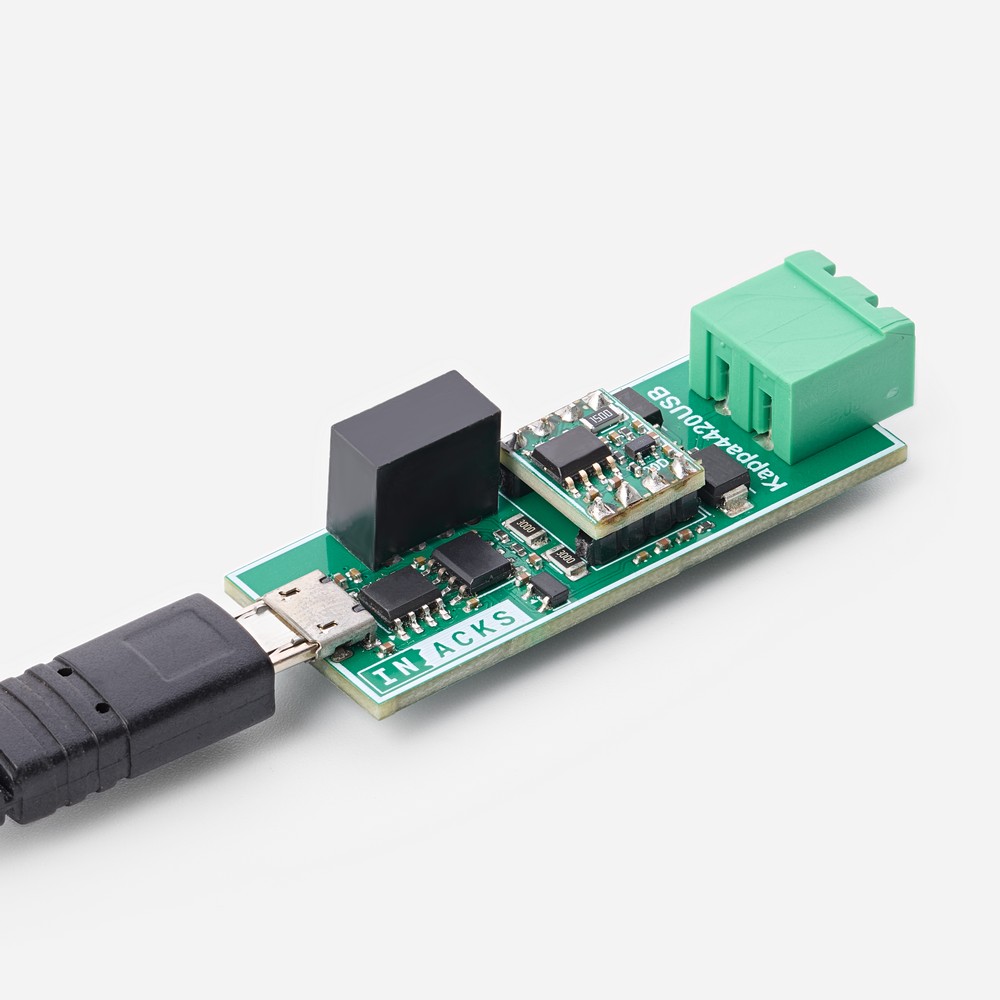
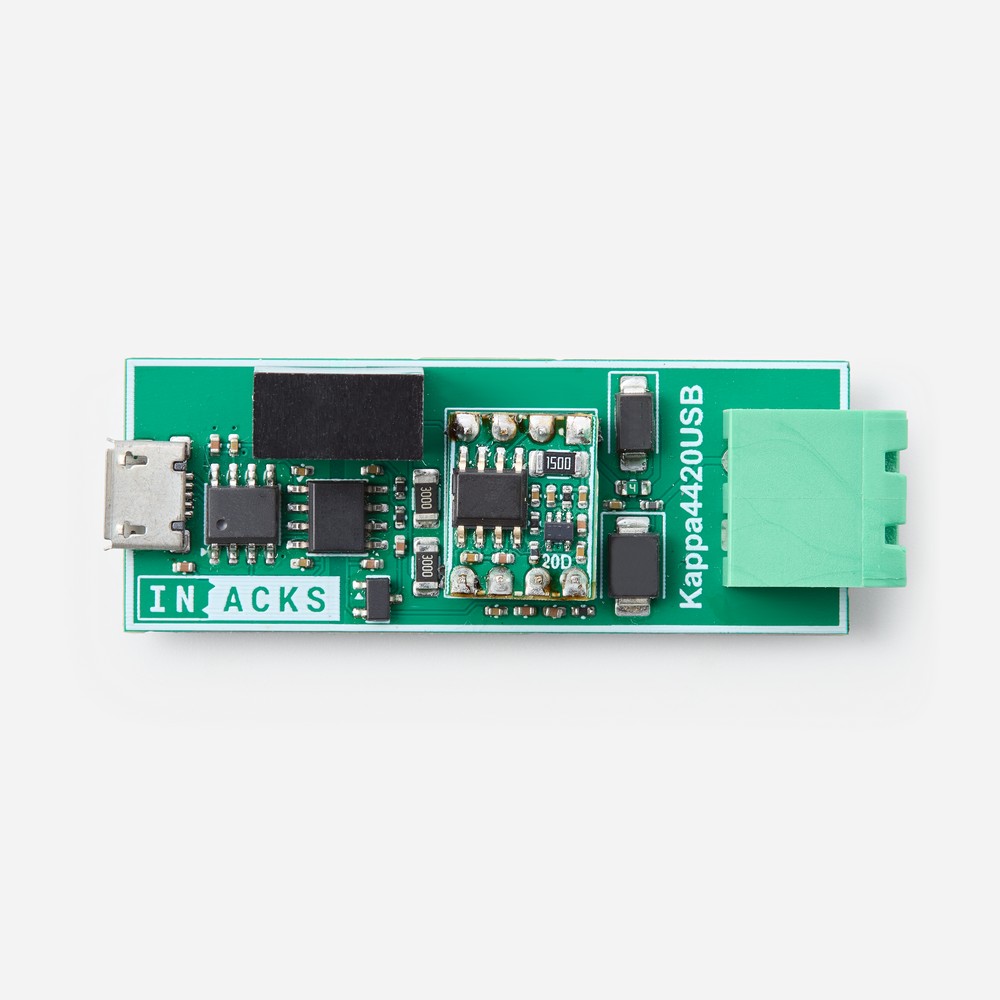
The Kappa4420USB is an isolated USB 4-20mA receiver based on the IS4420-M1 I2C 4-20mA current loop receiver module. The board sends the IS4420-M1 readings straight to your PC through a virtual COM port, so you can read a current loop without writing any firmware. There are no commands to send: open the COM port and the readings arrive.
Use this USB 4-20mA receiver to evaluate the IS4420-M1 before integrating it into your own product. It also works as a ready-to-use current loop meter on your bench or production line.
Applications
- Sensor reading: read temperature, pressure, level and flow transmitters from your PC.
- Transmitter testing: check and calibrate 4-20mA transmitters.
- Loop commissioning: verify the loop current while you install and troubleshoot PLC and field wiring.
- Data logging: record the loop current over time with the IS4420WIN software.
- Test automation: read the loop from your own software in laboratory and production tests.
How the USB 4-20mA Receiver Works
The loop current flows through the 150 Ω shunt of the IS4420-M1, which measures it about ten times per second. After each measurement, the IS4420-M1 sends one line of ASCII text with the loop current in mA, its percentage of the 4-20mA span, the module temperature, the model and the module revision. The Kappa4420USB passes this line to the PC through a PL2303GL USB-to-UART bridge, so the PC sees the board as a standard serial (COM) port.
Galvanic isolation separates the USB side from the current loop side. As a result, the PC ground and the current loop ground stay separate. This prevents ground loops and protects your PC from the current loop wiring.
Precise, Stable Readings
- 0.01 mA resolution, plus the percentage of the 4-20mA span with 0.1 % resolution: 4 mA is 0 % and 20 mA is 100 %.
- Fault levels stay visible: readings below 4 mA give negative percentages, and readings above 20 mA go over 100 %.
- Mains ripple rejection: each measurement averages 100 ms, exactly 5 periods of 50 Hz and 6 of 60 Hz.
- Factory calibrated at 4 mA and 20 mA.
- Clear error reporting: the line shows EOVER above the measuring range and ERROR when there is no valid measurement, instead of a wrong value.
Works with Your Tools
The board works on Windows, Linux and macOS, with standard serial settings (115200 baud, 8N1). Use IS4420WIN, the free INACKS software for Windows, to display the loop current in mA and % and log the results. Any serial terminal program also shows the readings. Your own software only needs to open the COM port and read the lines: every line has a fixed length, and every value is always in the same position.
Hardware Features
- IS4420-M1 4-20mA current loop receiver module, factory calibrated.
- USB Micro-B connector with a PL2303GL USB-to-UART bridge.
- Galvanic isolation between the USB side and the current loop side.
- Measuring range from 0 mA to 21.5 mA, for 2-wire and 3-wire transmitters.
- Power: the board is isolated, so it needs both the USB power and the current loop power supply, as any current loop configuration does.
Quick Start with the USB 4-20mA Receiver
- Wire the transmitter and the current loop power supply to the Kappa4420USB, as shown in the user manual.
- Then, connect the Kappa4420USB to your PC with a USB cable and switch on the current loop power supply.
- Open IS4420WIN, or open the COM port at 115200 baud, 8N1, with a serial terminal program.
- Finally, read the loop current: a new line arrives about ten times per second.
For the wiring details and the complete description of the data format, see the Kappa4420USB User Manual (ISDOC158). In addition, the IS4420-M1 datasheet (ISDOC146) covers the detailed specifications of the module.
This company and the products provided herein are developed independently and are not affiliated with, endorsed by, or associated with any official protocol or standardization entity. All trademarks, names, and references to specific protocols remain the property of their respective owners.
(This product includes the Kappa4420USB. The current loop power supply and the transmitter are not included.)