
Skip to main contentSkip to footer

Multiple I2C Addressable LED Controller Chip – IS3752

Control up to 1200 LEDs/chip

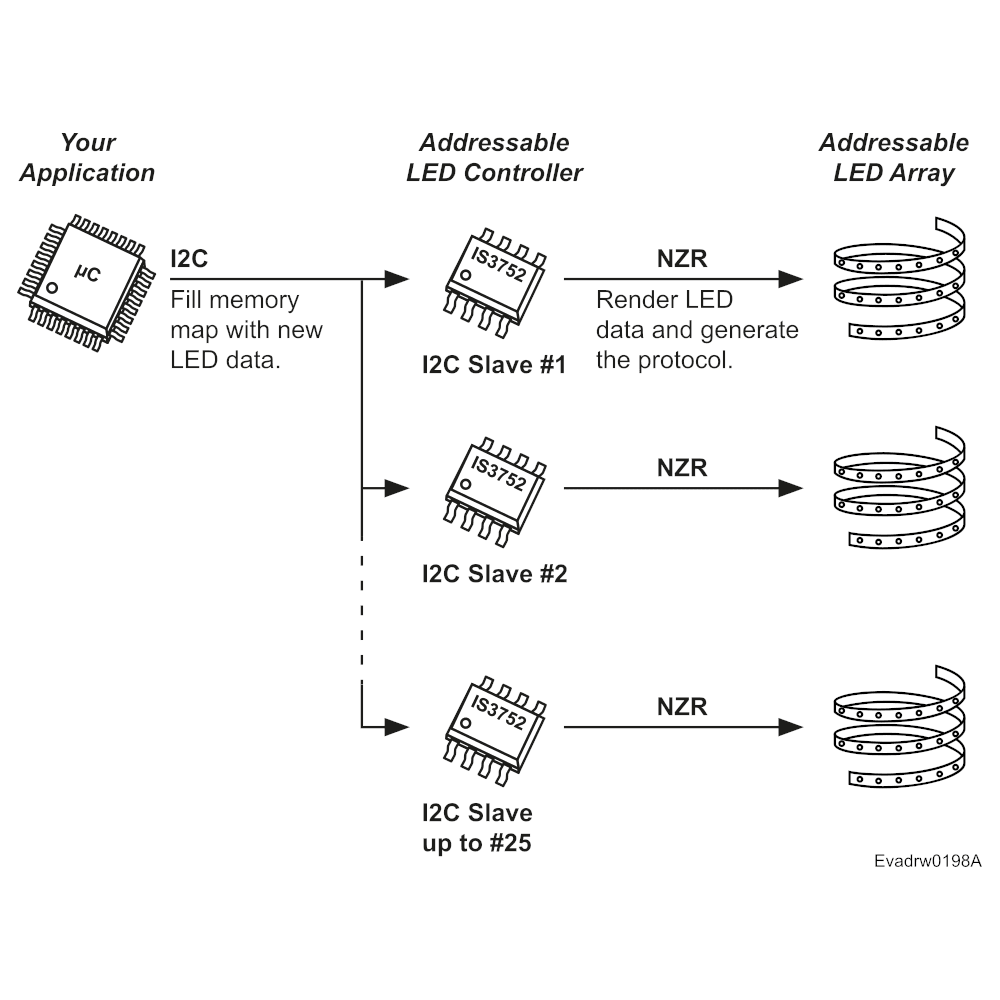
Control up to 25 chips/bus

✅ Control up to 30,000 LEDs in a single I2C-serial interface

FPS: 27 Hz

Compatible with:
– WS2811
– WS2812 / WS2812B / WS2812C
– WS2813
– WS2815
– NeoPixel
– SK6812
– GS8208
 All color sequences: GRB, RGB, etc.
– LEDs with 3, 4, and more colors: GRBW, RGBW, RGBWC (LEDs with warm and cold white)

Volume pricing

Qty.Price
1 - 9 1,95 
10 - 24 1,85 
25 - 99 1,70 
100 - 299 1,35 
300 - 499 1,23 
500 - 999 1,11 
1000 - 7999 1,03 
8000 + 0,98 
SKU: IS3752-S8

Documentation

What is it, and what it does

(This IC is the successor to the IS3750, which supported only a single I2C slave address. Now the IS3752 features 25 configurable I²C slave addresses and a different pinout.)

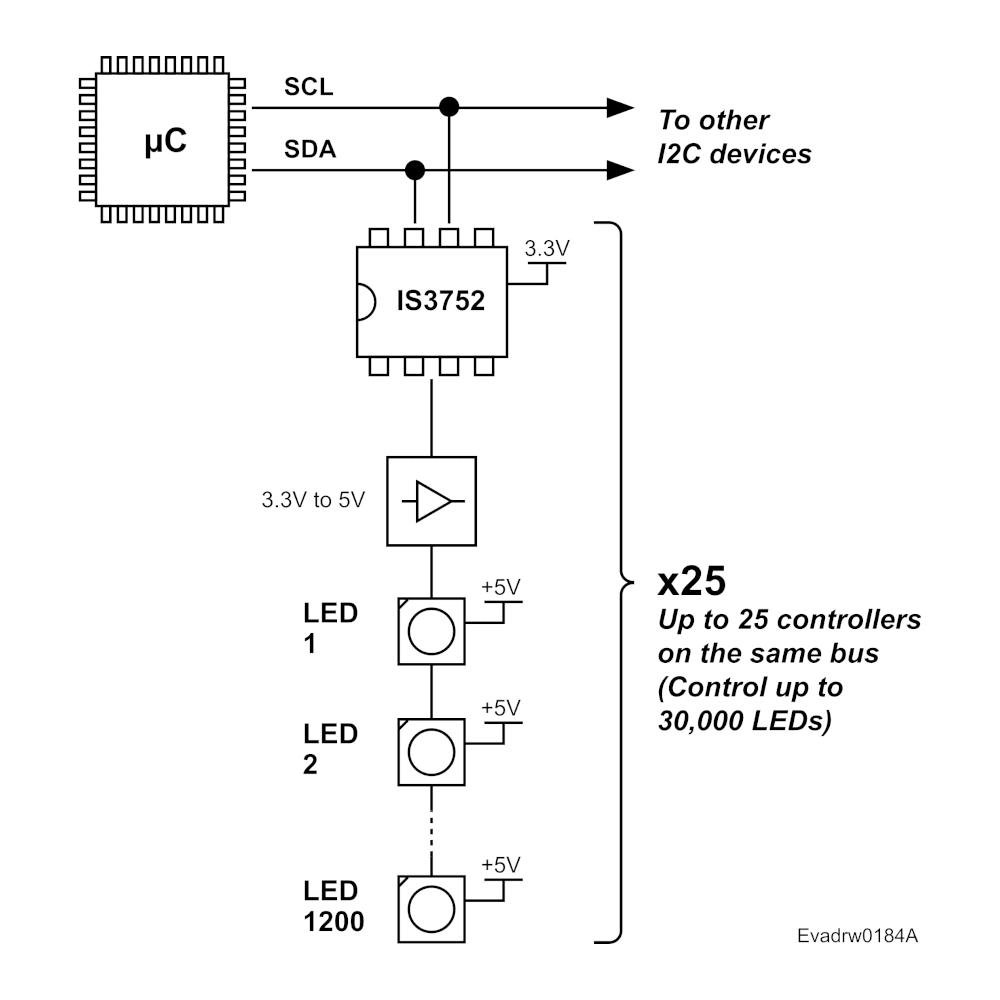
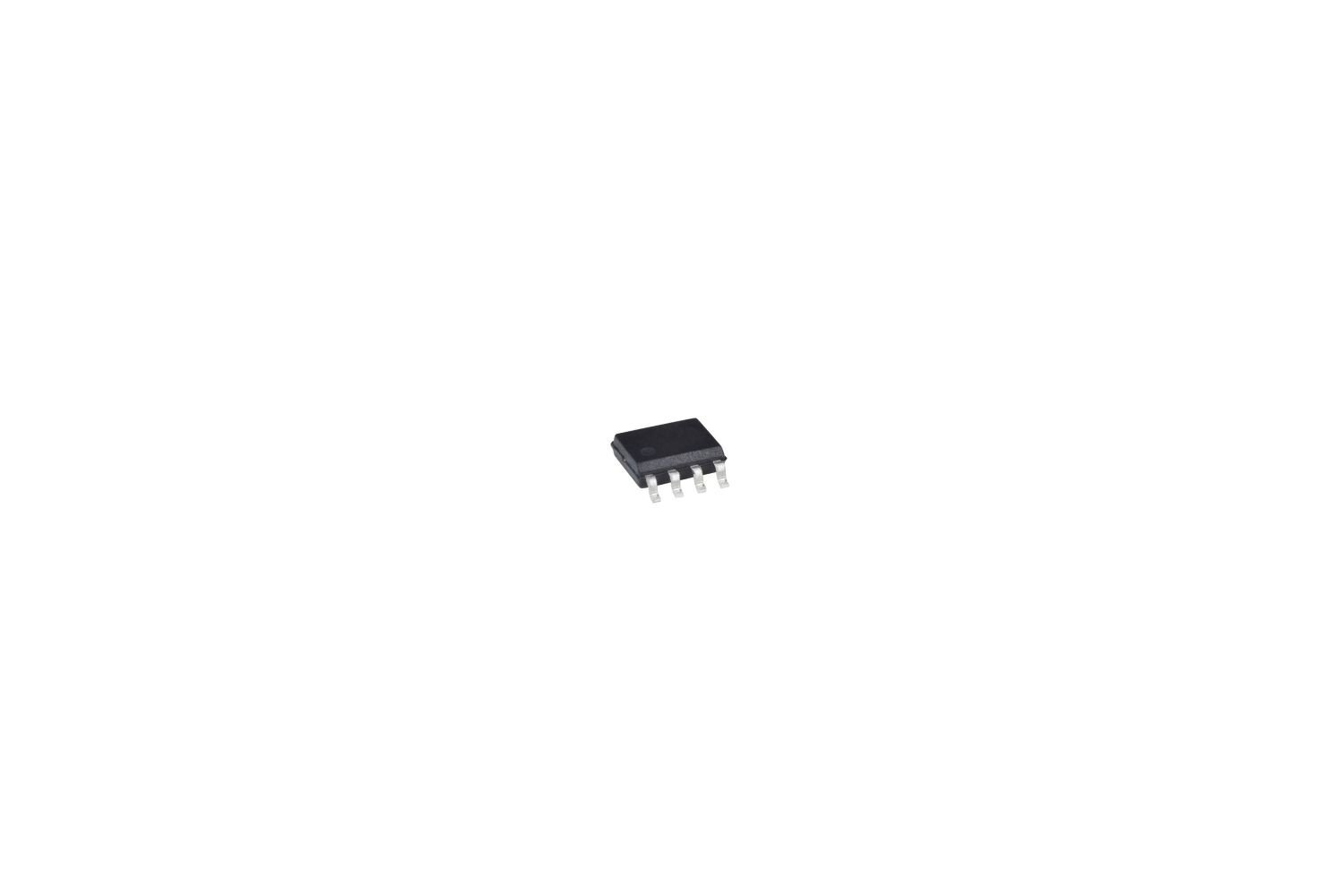
The IS3752 is an addressable LED controller IC accessed via I2C. It supports up to 25 configurable I2C addresses, allowing up to 25x IS3752 devices to operate on the same I2C-serial interface.

Each IS3752 can control up to 1,200 LEDs. Using 25x IS3752 on the same I2C-serial interface enables control of up to 30,000 LEDs.

IS3752 is designed to control single-wire addressable LEDs using NZR coding, which is widely used in popular LEDs such as the WS2812 family.

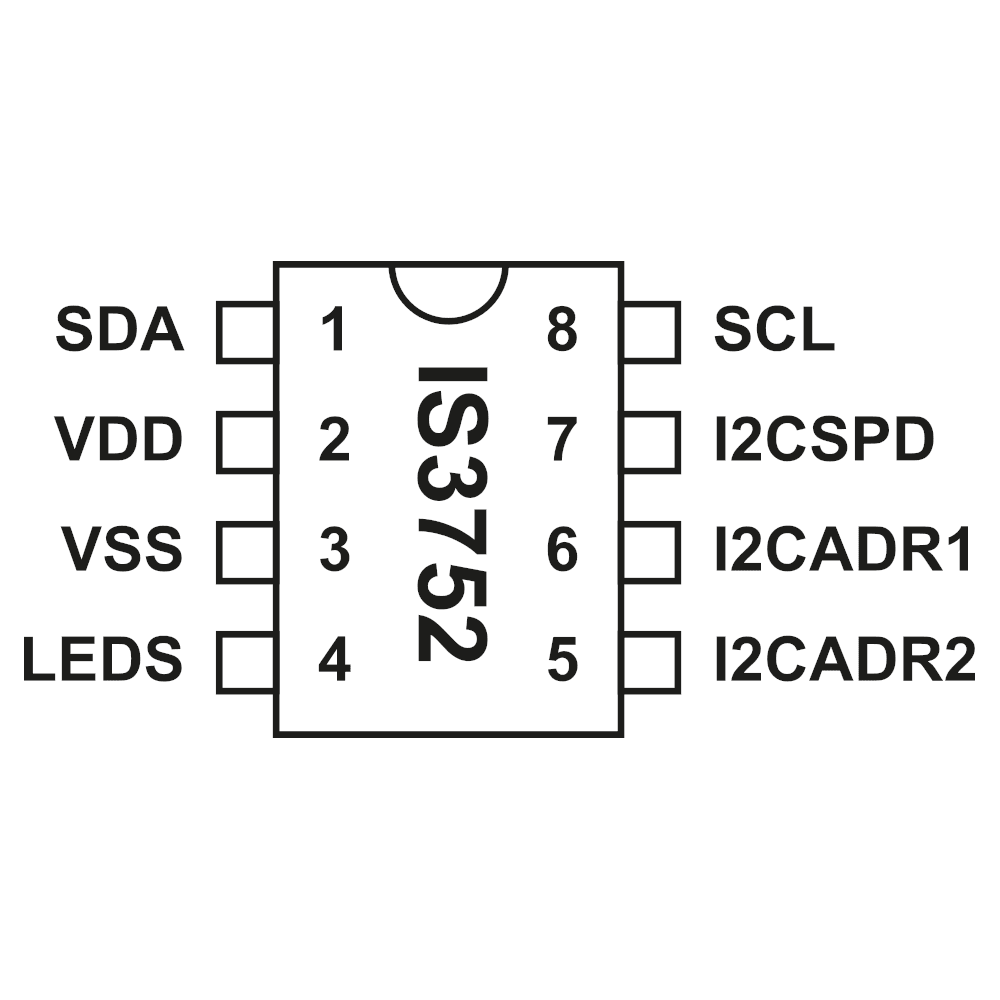
The chip operates at a 3.3 V. Its I2C pins are 5 V tolerant, making it compatible with both 3.3 V and 5 V systems.

What problem it solves

Generating an addressable LED protocol requires tight timing, which increases CPU load and the number of ISR calls.

The use of the IS3752 is especially suitable for offloading LED protocol generation from the microcontroller, reducing CPU and ISR load. This simplifies firmware, improves debugability, and reduces overall engineering effort.

With the ability to configure up to 25 different I2C slave addresses, it allows you to break down your LED control challenge into multiple parts, making firmware development faster and easier to debug.

Benefits

Implementing an addressable LED protocol in a microcontroller can be challenging due to strict timing constraints. This increases firmware complexity, making it more difficult to debug due to extensive use of interrupt service routines (ISRs). It also consumes more system resources (timers, flash, RAM, etc.) and ultimately requires more engineering effort, potentially delaying product release.

Using the IS3752 in your project simplifies and accelerates development tasks.

How it works

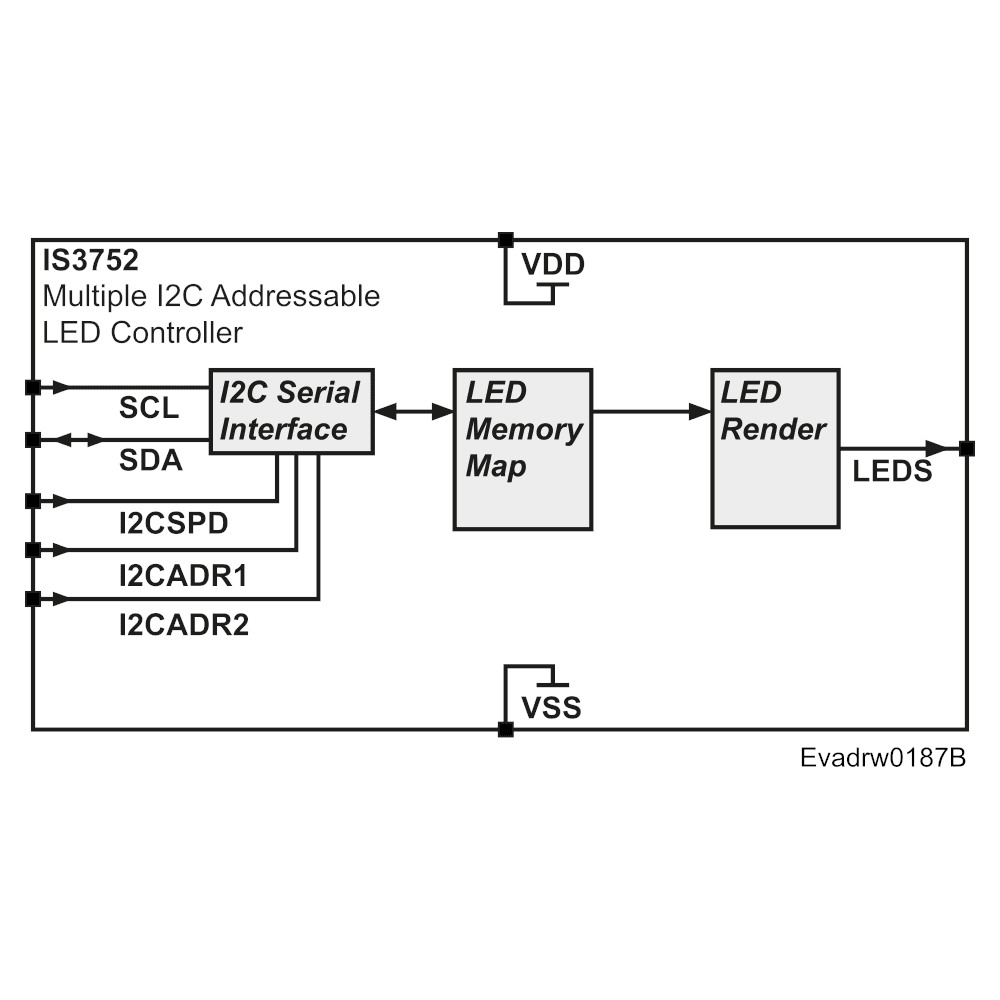
The IS3752 chip is very easy to use. It has been designed to facilitate the integration of addressable LEDs into your project.

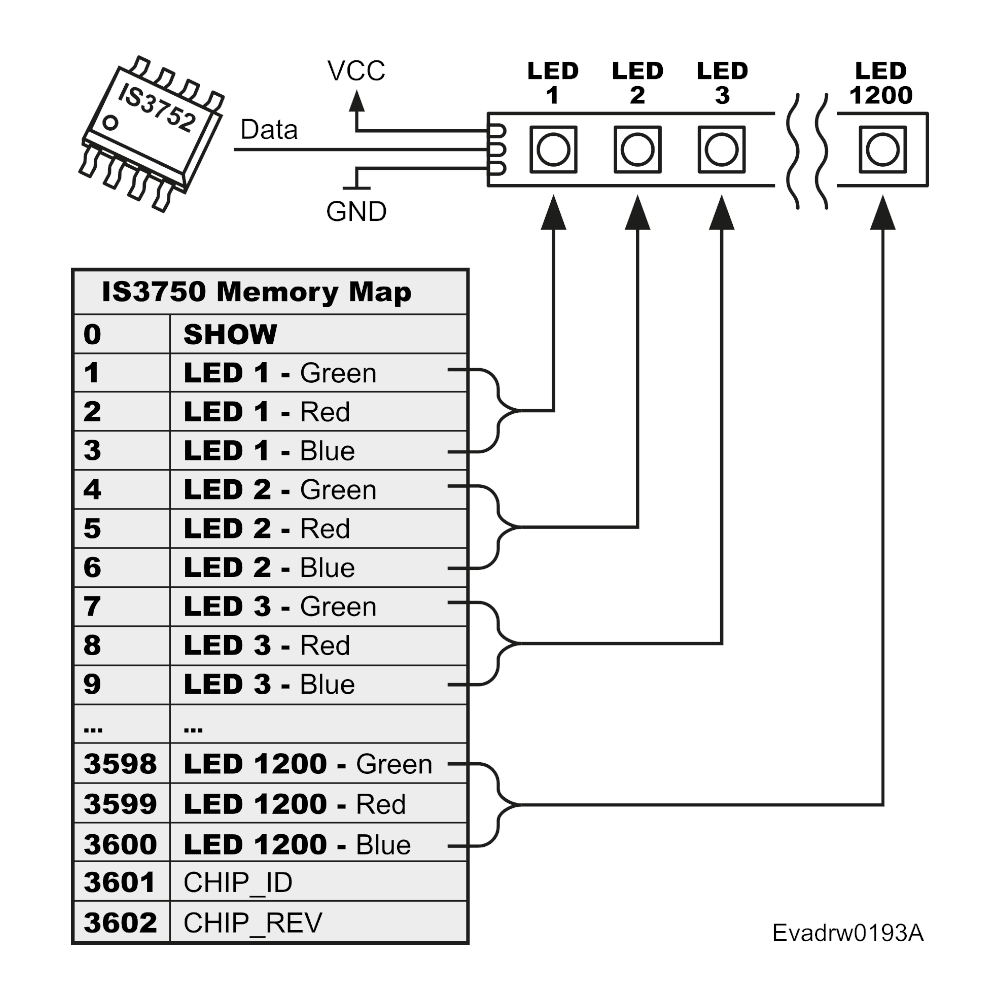
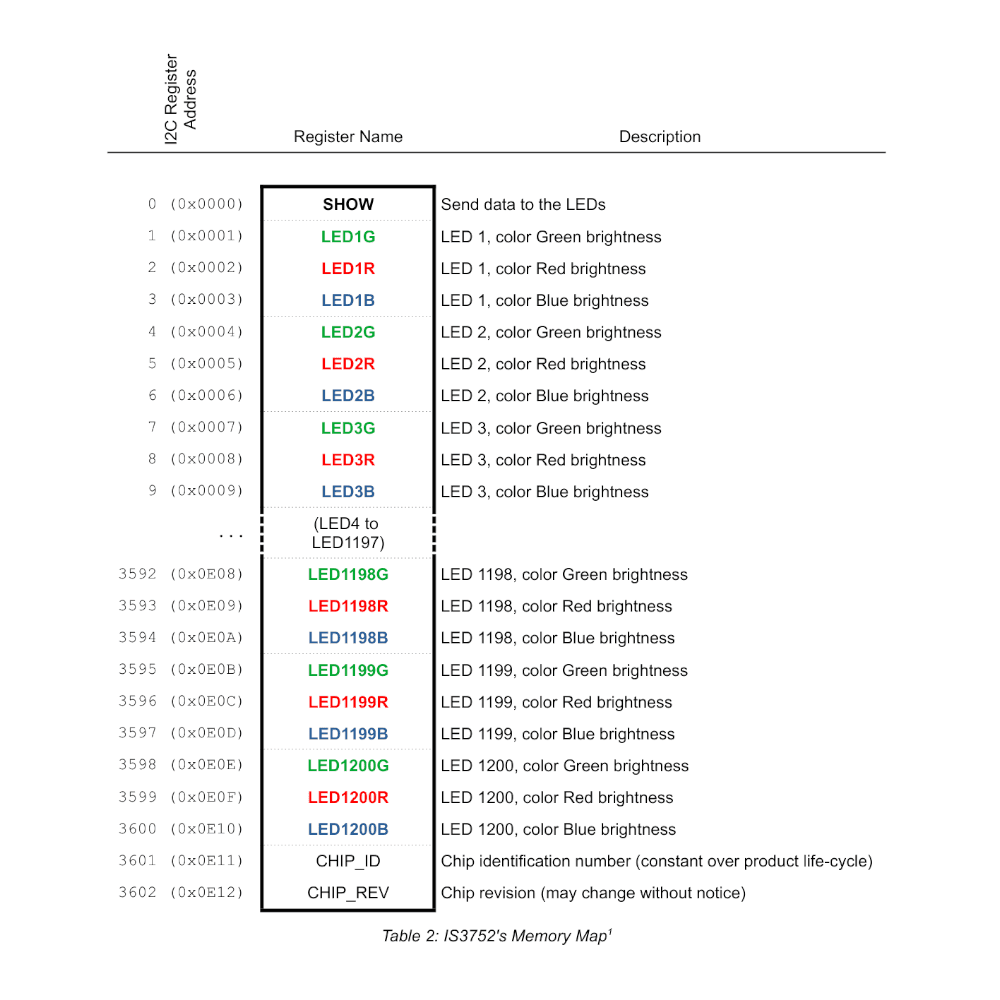
Your microcontroller only needs to write the desired brightness values to the corresponding LED color registers (LEDx). A value of 0 turns the LED color channel off, while a value of 255 sets it to maximum brightness.

You can perform as many write operations as you need, and when you are ready, to update the LEDs acording to the memory map data, you only need to write a 1 to the SHOW register. Every time a 1 is written to the SHOW register the LEDs are updated. This register is automatically reset to 0.

Think of how a classical I2C EEPROM works. It is essentially the same, with the only difference being that writing to a memory register is translated into LED brightness control after setting the SHOW register to 1.


This company and the products provided herein are developed independently and are not affiliated with, endorsed by, or associated with any official protocol or standardization entity. All trademarks, names, and references to specific protocols remain the property of their respective owners.
Documentation

Models

Q: What is the difference between the IS3750 and the IS3752?
A:
– The IS3750 supports only a single I2C slave address, meaning only one device can be used on the same I²C interface, and therefore only 1,200 LEDs can be controlled.
– The IS3752 supports up to 25 configurable I2C slave addresses, allowing up to 25 devices on the same bus and increasing the LED control capacity to 30,000.

Q: How does the IS3752 work?
A: You write data to its internal memory via I2C, and the device converts it into addressable LED data to control the LEDs.

Q: Does the IS3752 require a specific LED library or complex setup?
A: No. The primary benefit of the IS3752 Addressable LED Controller is its simplicity. It only requires standard I2C access—similar to writing to an EEPROM—to write RGB values, eliminating the need for specialized addressable LED libraries or complex timing setups.

Q: How many LEDs can the IS3752 control?
A: Up to 1,200 three-color LEDs or 900 four-color LEDs.

Q: Can I build a screen with addressable LEDs and play video on it?
A: No. While addressable LEDs may seem fast, they are not well suited for video or display applications. For screens and video playback, other LED technologies are a much better choice.

Q: I need to control the LEDs using SPI. Is there a solution?
A: Yes. We check the web page.

Q: Do you have a DMX-to-addressable LED controller chip?
A: Yes. We offer the IS3751, a DMX-to-addressable LED controller chip that works standalone, without the need for an external microcontroller.

Q: Which LED color sequences can the IS3752 control?
A: Any color sequence, including GRB, RGB, GRBW, and others.

Q: Which LEDs are compatible with the IS3752?
A: All LEDs based on the WS281x protocol are supported, including WS2811, WS2812 / WS2812B / WS2812C, WS2813, WS2815, NeoPixel, SK6812, GS8208, and others.

Q: How does the IS3752 help reduce CPU usage?
A: The IS3752 handles the continuous, time-critical data stream and precise timing internally, freeing your microcontroller from heavy ISR and processing load. You only need to write the corresponding I2C registers.

Q: Does the IS3752 datasheet include a schematic example?
A: Yes. See the datasheet or download the example.

Q: In which products is the IS3752 typically used?
A: Custom lighting, LED signaling, color-coded process indicators, architectural lighting, status bars or meters, interactive buttons or sliders with visual feedback, and similar applications.


Reviews

There are no reviews yet.

Only logged in customers who have purchased this product may leave a review.

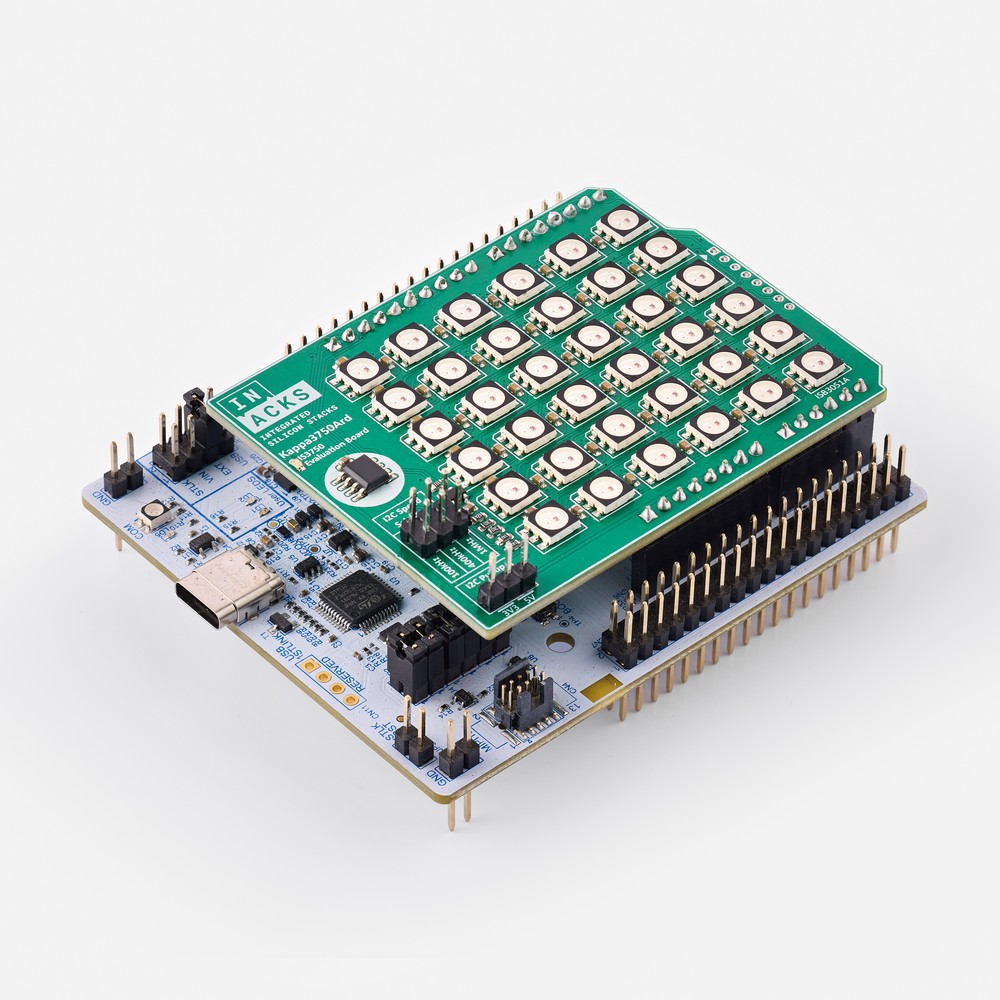
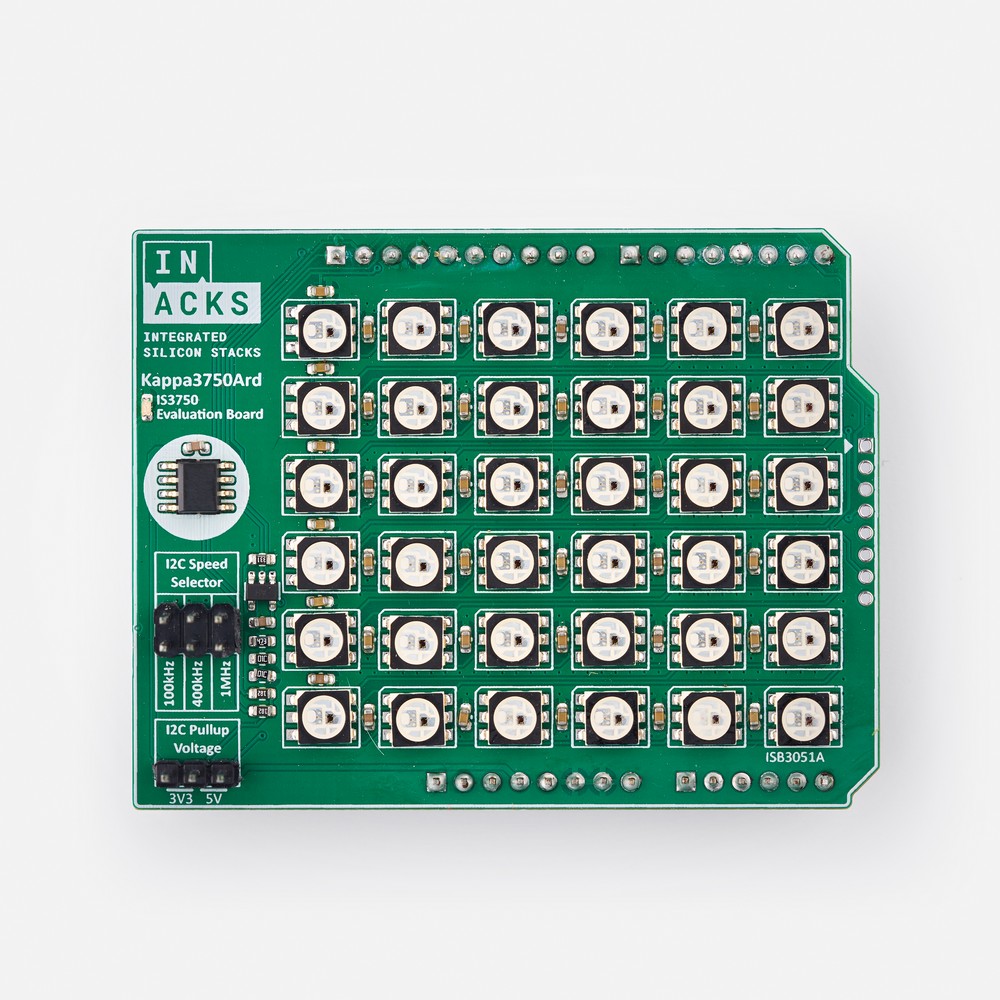
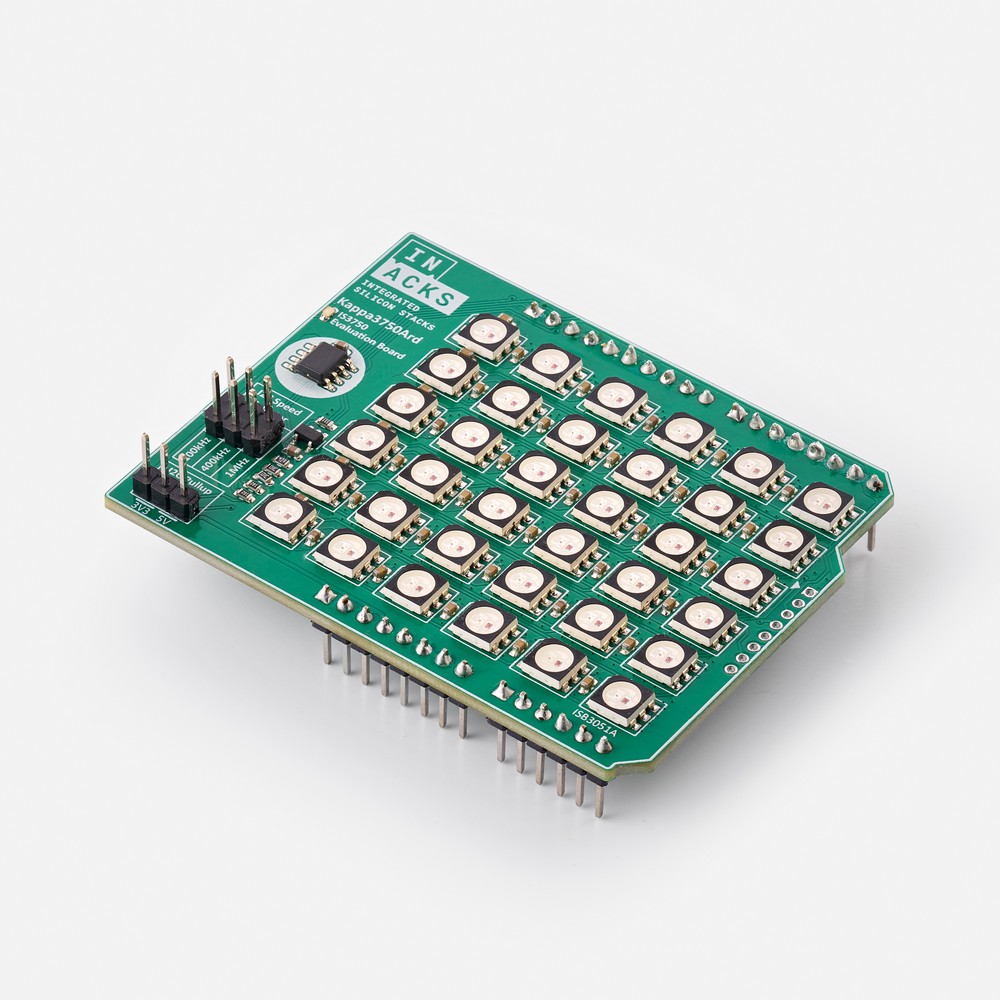
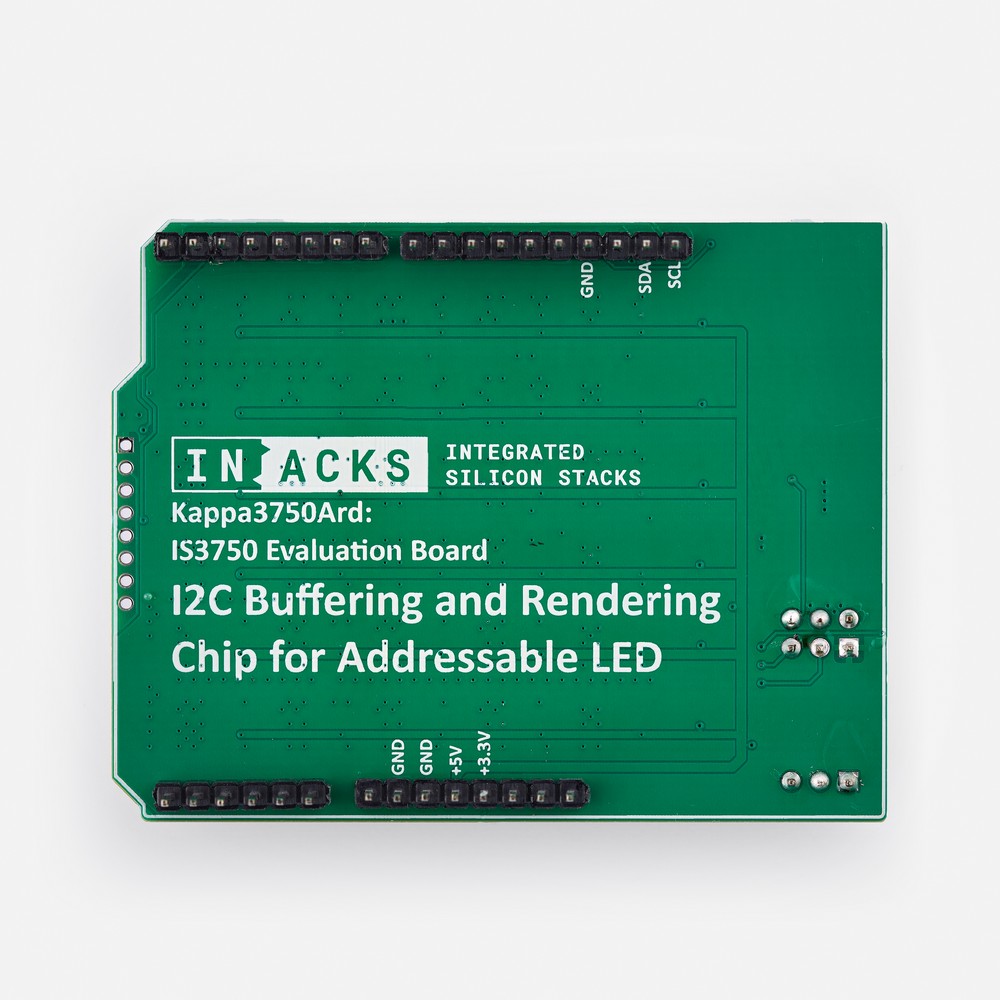
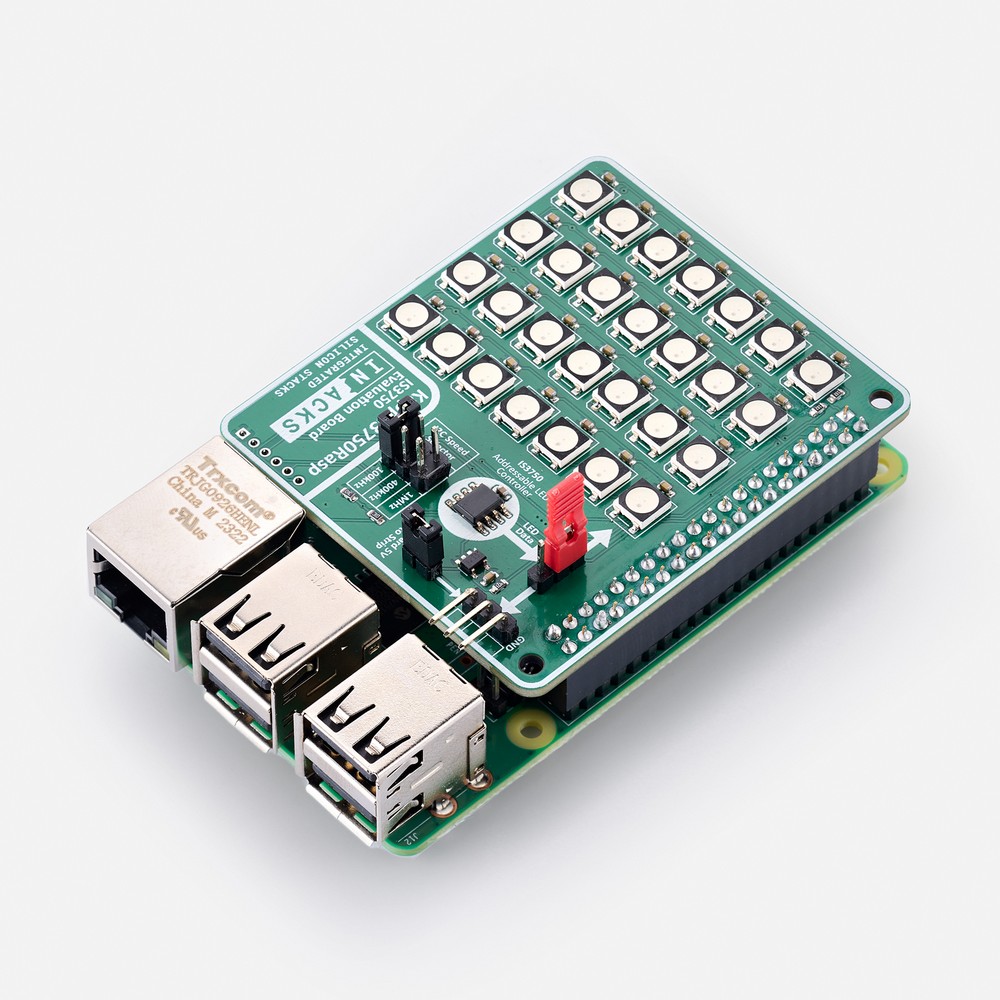
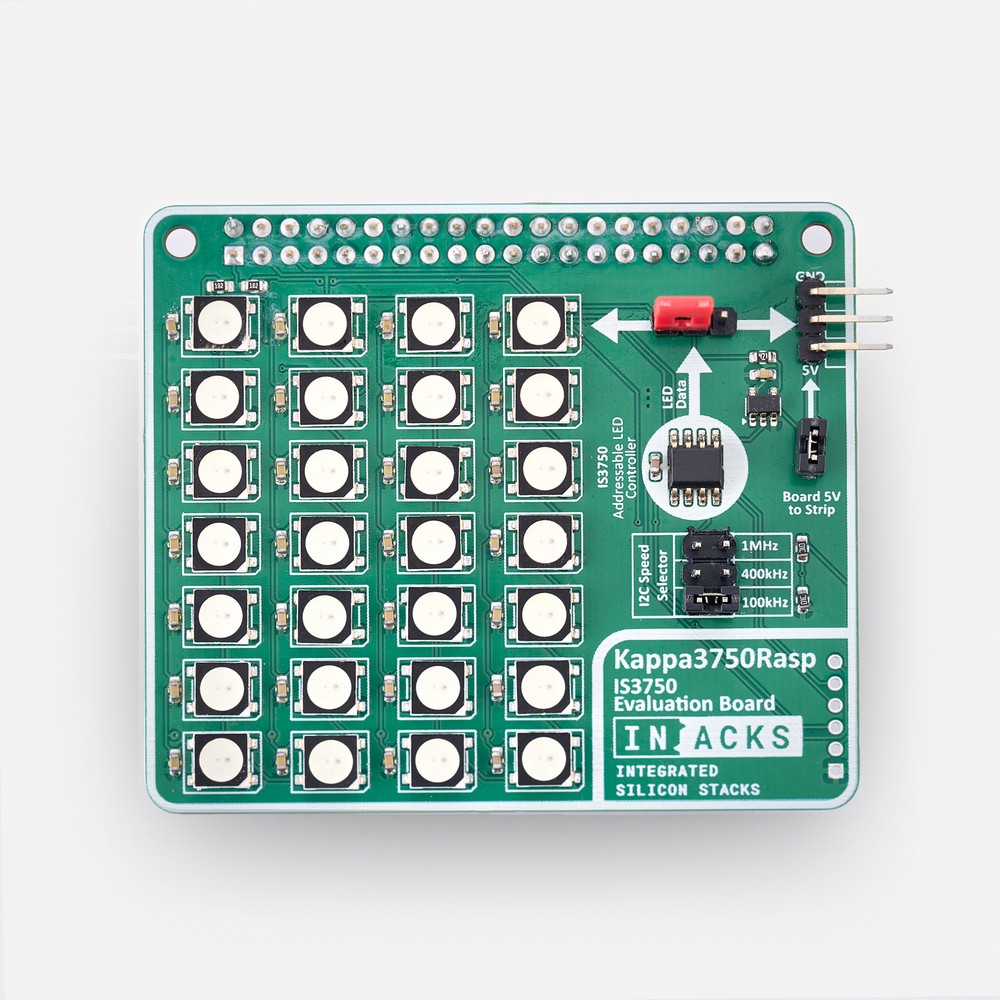
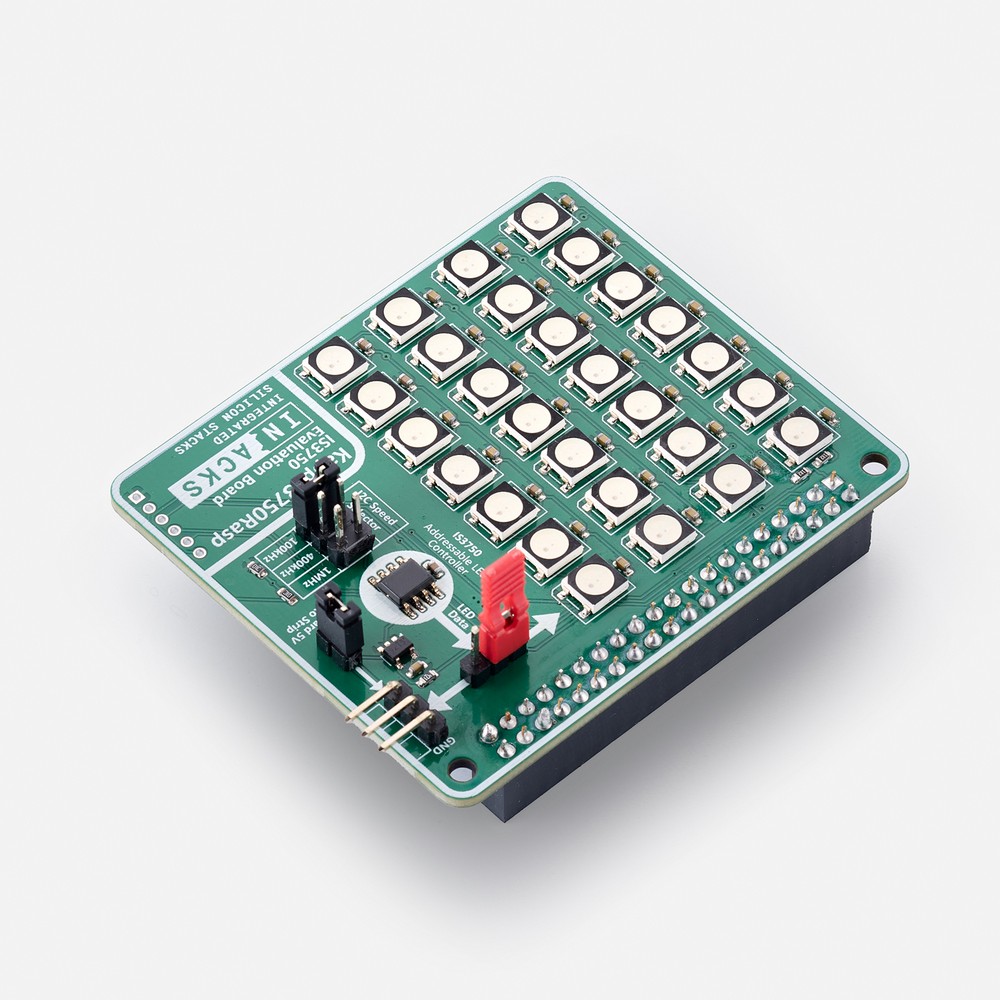
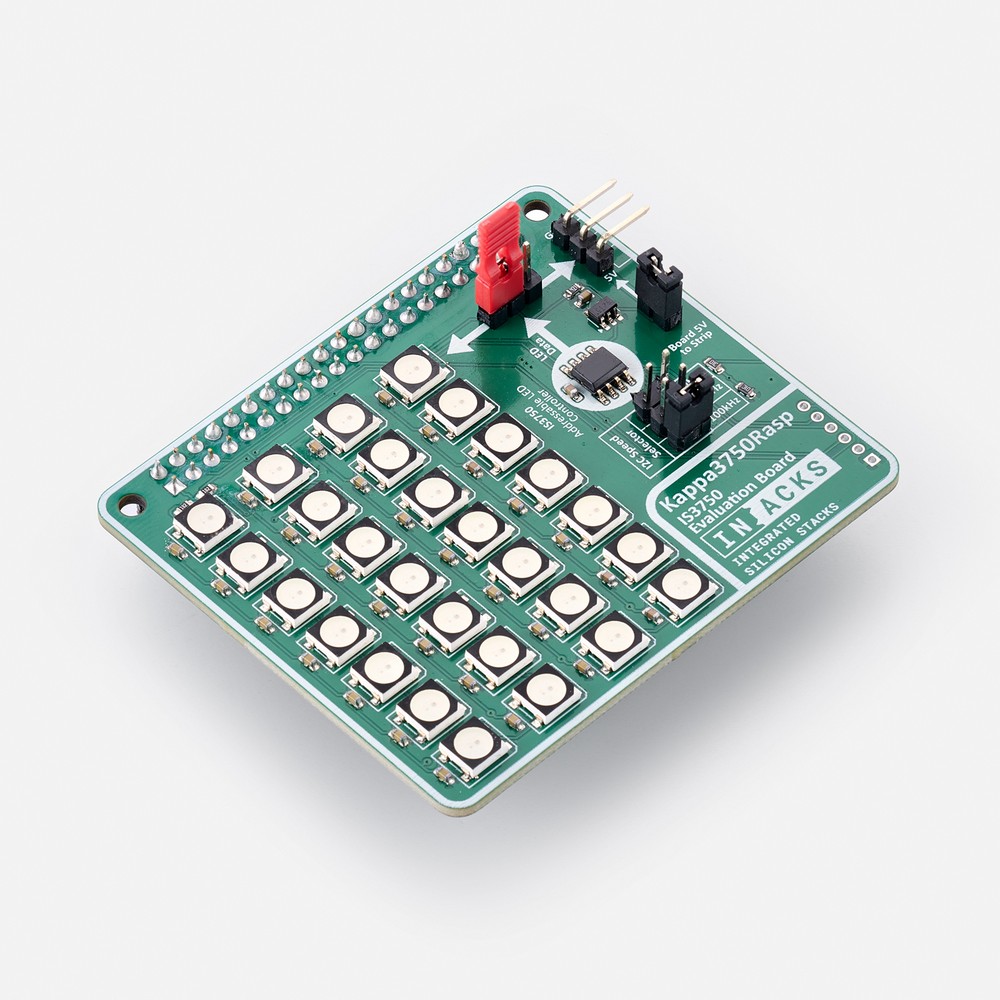
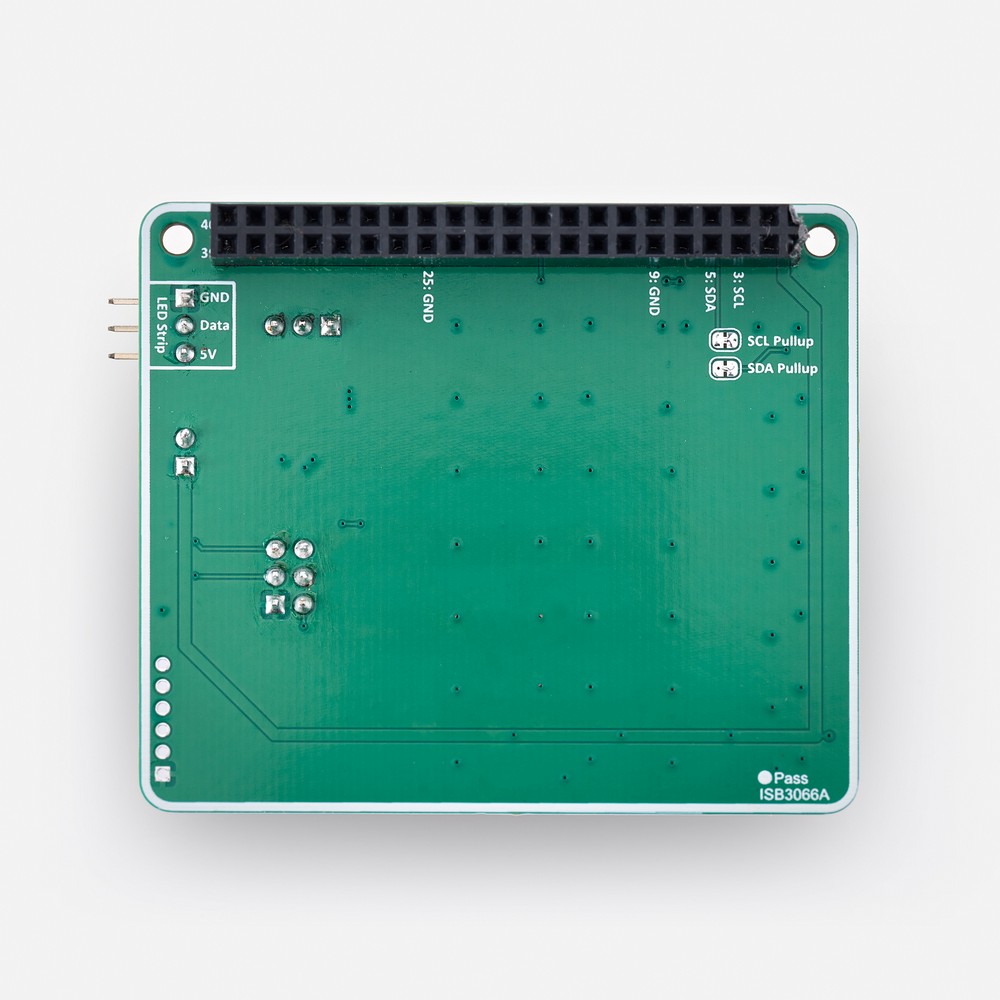
Evaluation boards, Modules & other related products

Evaluation boards, modules, and accessories designed for fast prototyping and easy integration. Featuring standard interfaces and built-in transceivers, they simplify testing and development across platforms like Arduino, Nucleo, or Raspberry Pi. Ideal for adding RS485, RS232, or Ethernet functionality with minimal effort and maximum compatibility.

Have a question?

Fill out this field
Please enter a valid email address.
Fill out this field
You need to agree with the terms to proceed