Skip to main contentSkip to footer

I2C Modbus RTU Slave Chip – IS4310

500 Holding Registers for user data

Available Function Codes:
– 0x03 Read Holding Registers
– 0x06 Write Single Register
– 0x10 Write Multiple Registers

Default Modbus Settings:
– Modbus Slave ID: 1
– Modbus Baud Rate: 19200 bps
– Modbus Parity: Even
– Modbus Stop Bits: 1

I2C Characteristics:
– I2C Slave Address: 0x11 (fixed)
– I2C Speed: 100 kHz, 400 kHz, 1 MHz
– I2C Voltage: 3.3 V (5 V tolerant)

Volume pricing

Qty.Price
1 - 9 1,95 
10 - 24 1,85 
25 - 99 1,70 
100 - 299 1,35 
300 - 499 1,23 
500 - 999 1,11 
1000 - 7999 1,03 
8000 + 0,98 
SKU: IS4310-S8

Description

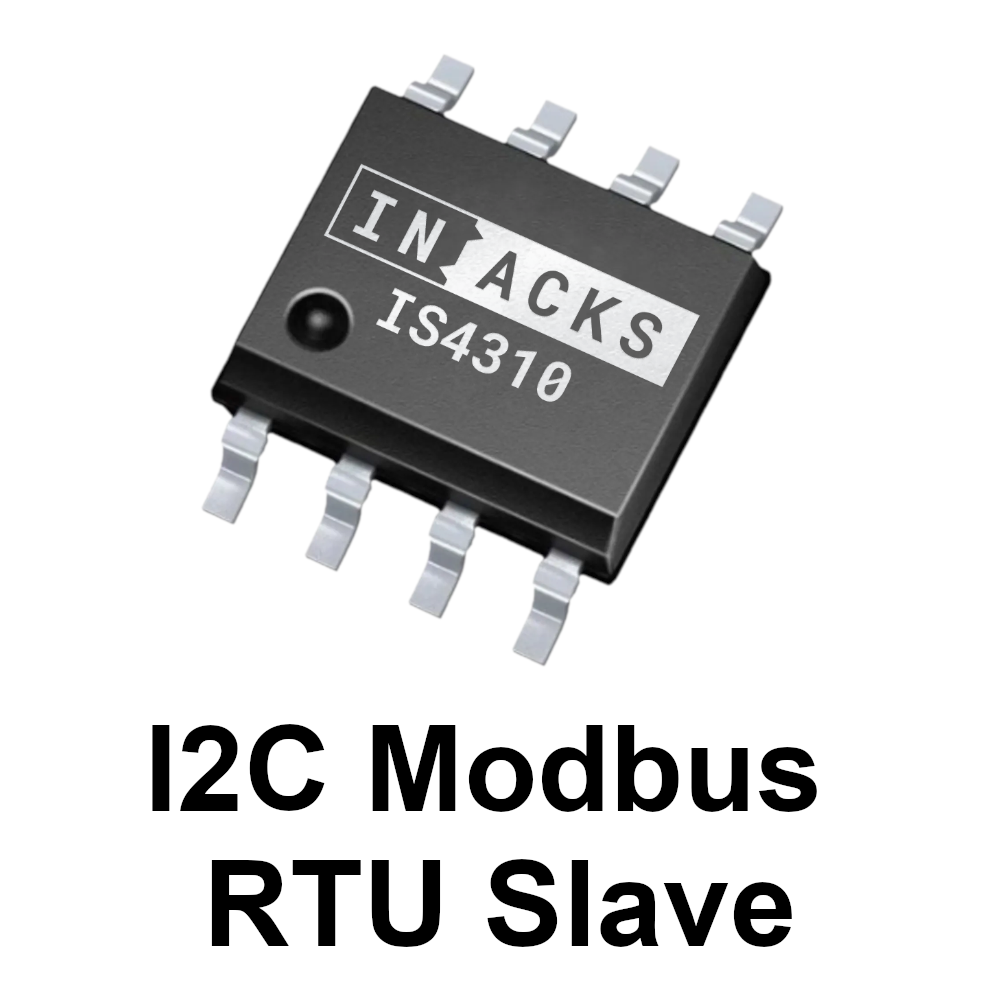
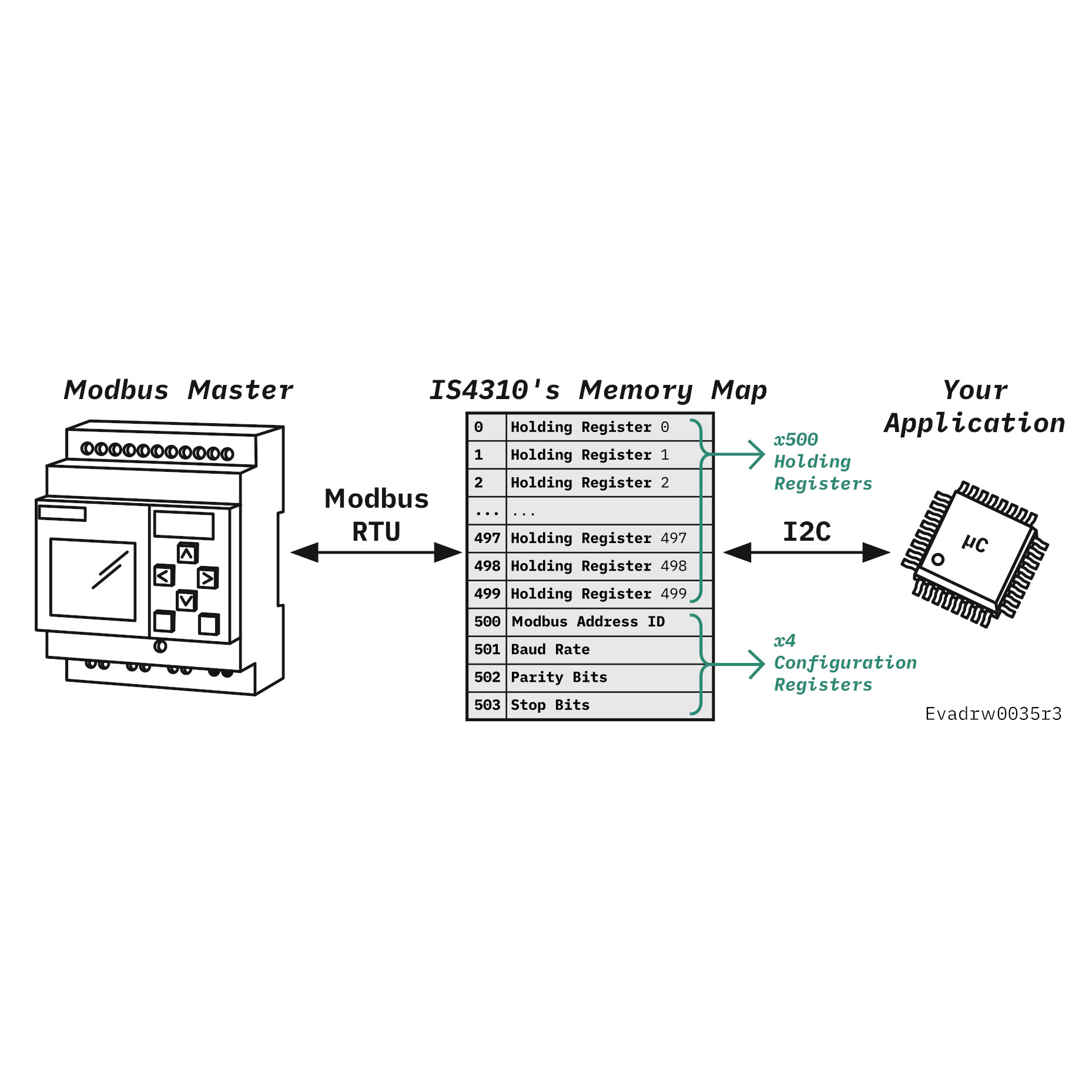
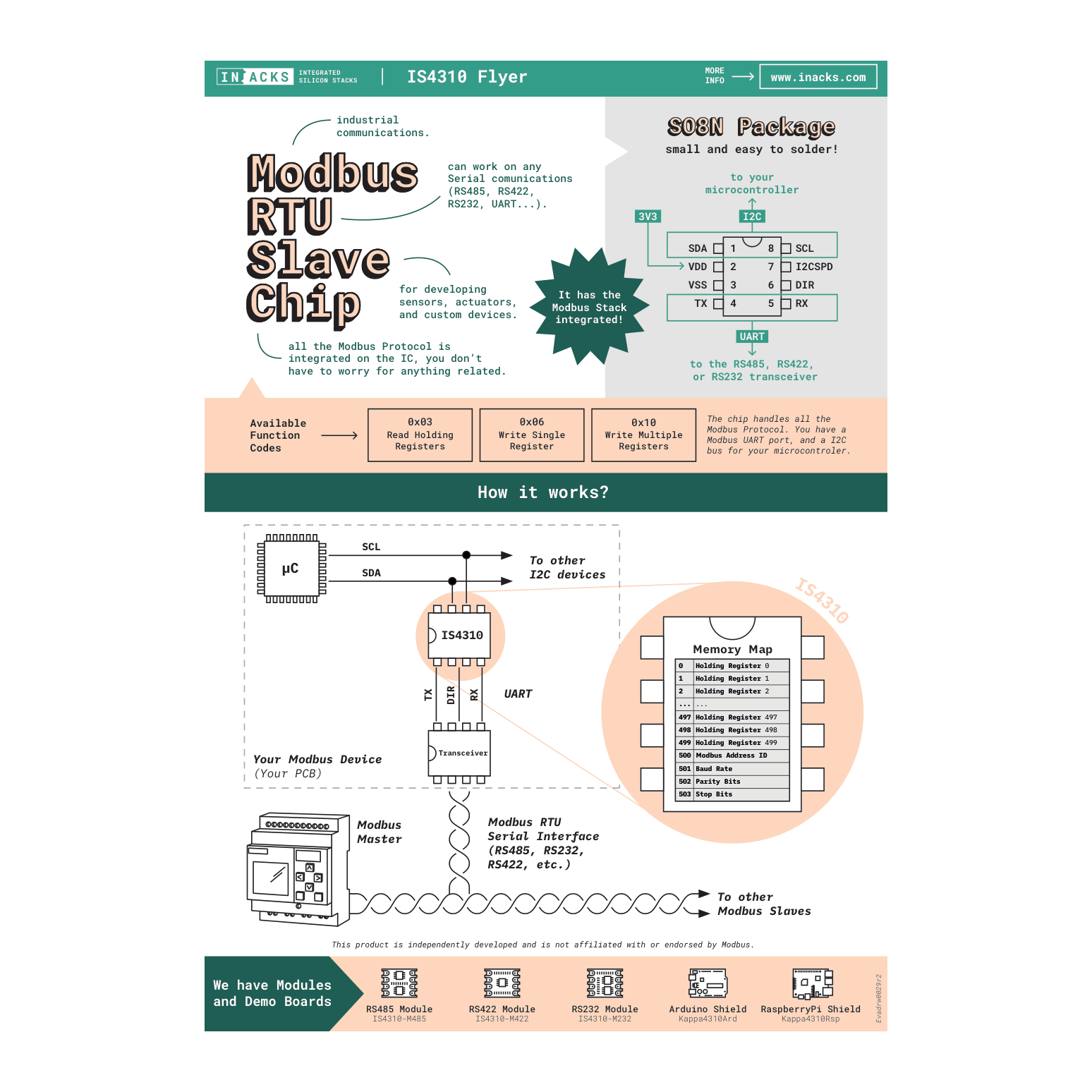
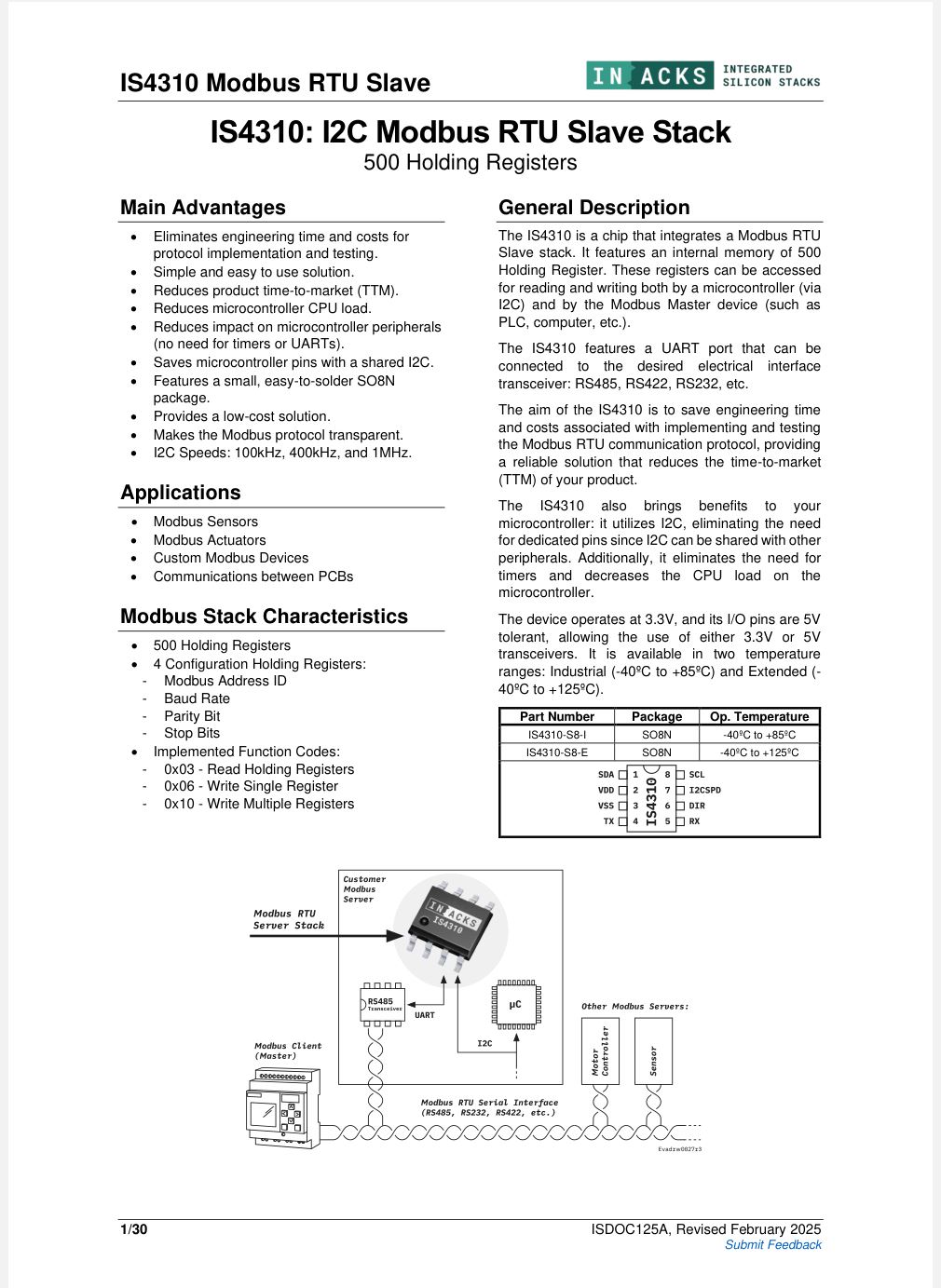
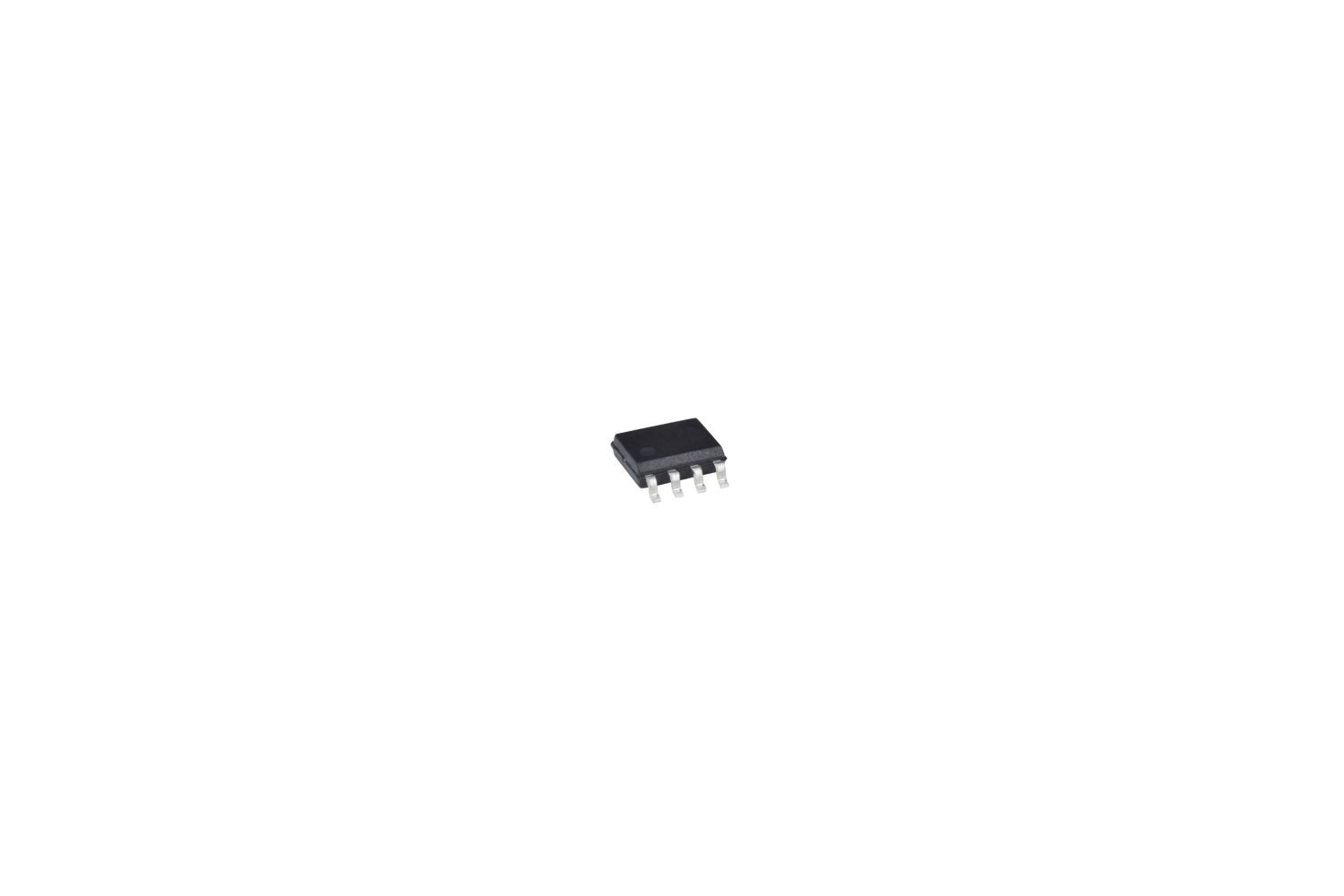
IS4310 is a chip that integrates a Modbus RTU Slave stack. It features an internal memory of 500 Holding Registers (free for your use), accessible by both a microcontroller (via I2C) and a Modbus Master device (e.g., PLC, computer, etc.).

The available Function Codes are:

  • 0x03 Read Holding Registers
  • 0x06 Write Single Register
  • 0x10 Write Multiple Registers

You can use the IS4310 in different ways:

  • As a Sensor → your microcontroller writes to the chip’s Holding Registers via I2C.
  • As an Actuator → your microcontroller reads from the chip’s Holding Registers via I2C.
  • Mixed → your microcontroller reads and writes Holding Registers via I2C.

Just access the Holding Register addresses you need over I2C — no libraries required.

The IS4310 offers a ready-to-use Modbus stack solution that helps reduce development time and speed up your time-to-market, while fully complying with strict T1.5 and T3.5 protocol timing requirements.

How it works?

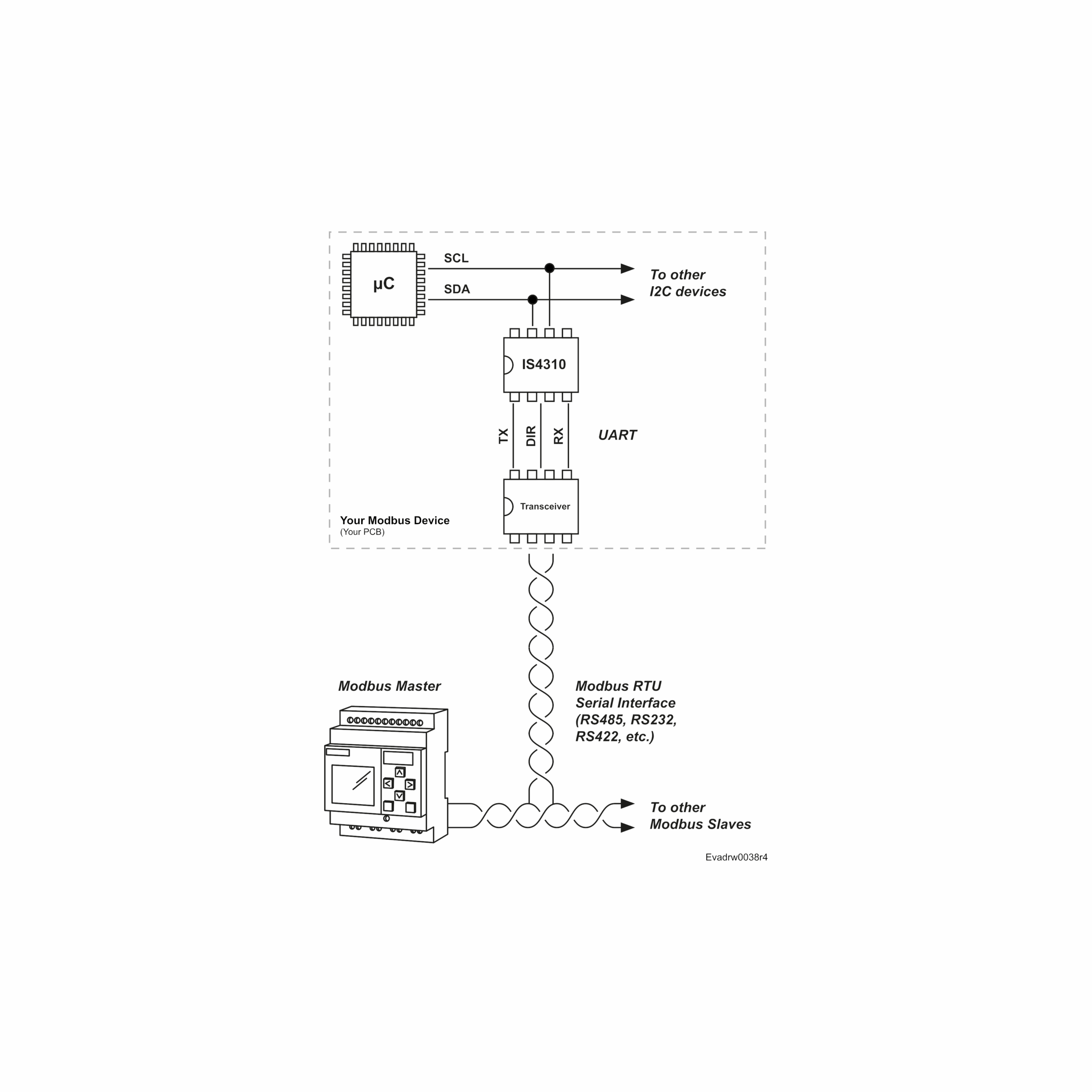
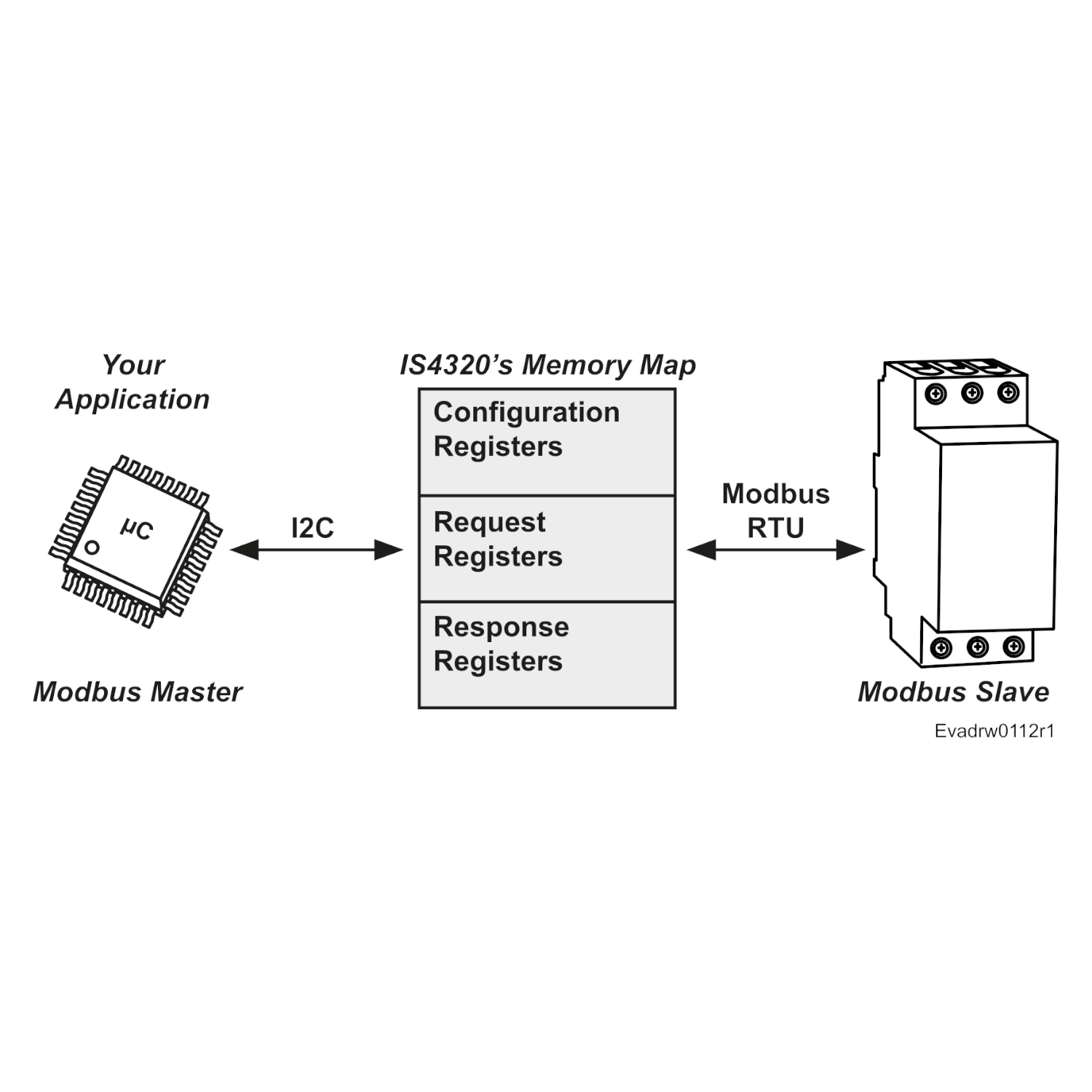
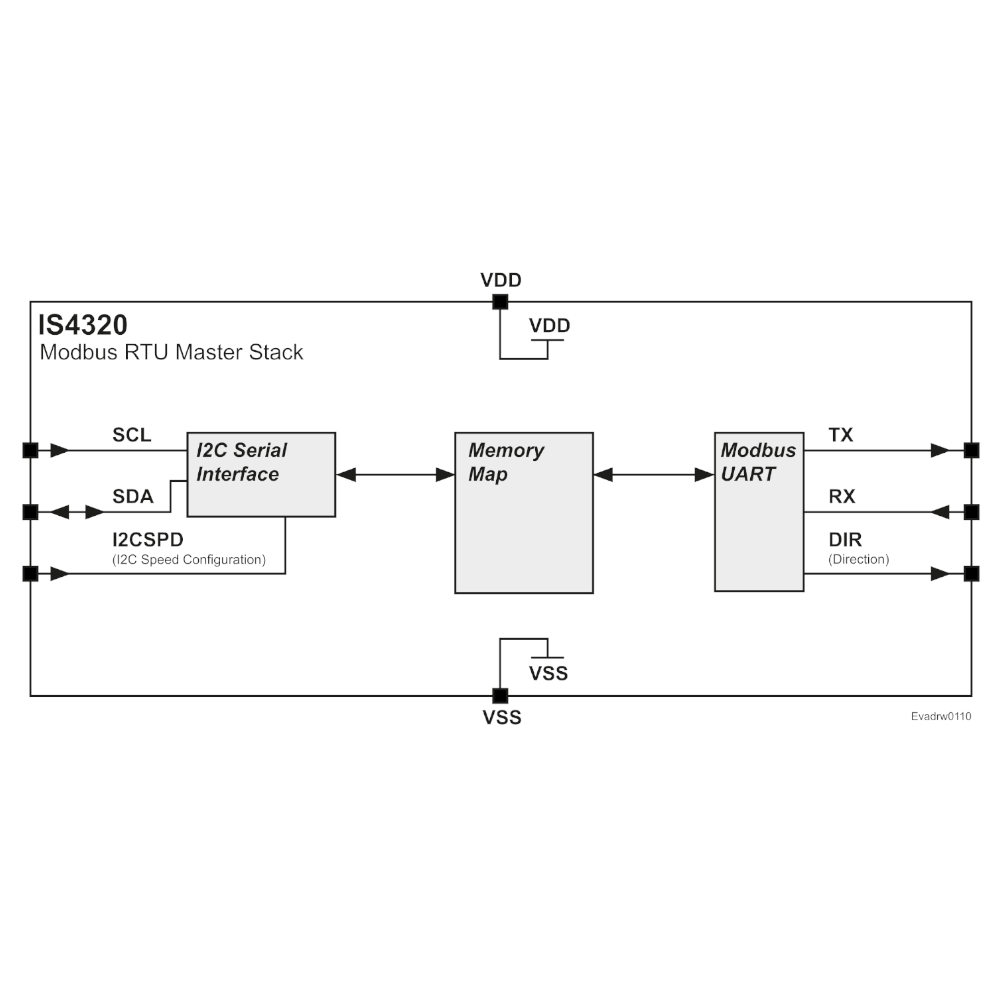
The chip provides two interfaces:

  • I2C interface for your microcontroller, FPGA, Arduino, Raspberry Pi, etc.
    ➜ This is where your system reads/writes Modbus data.
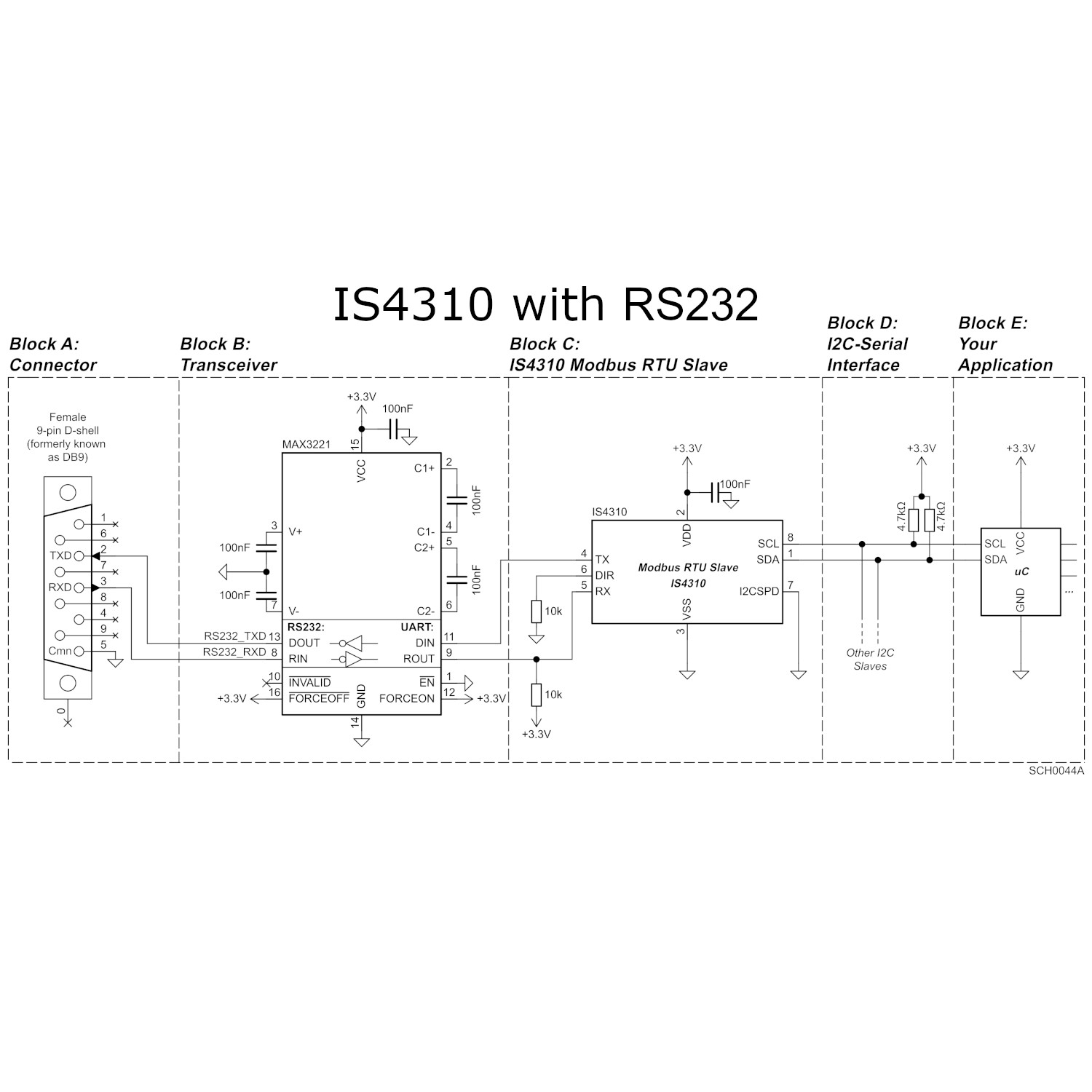
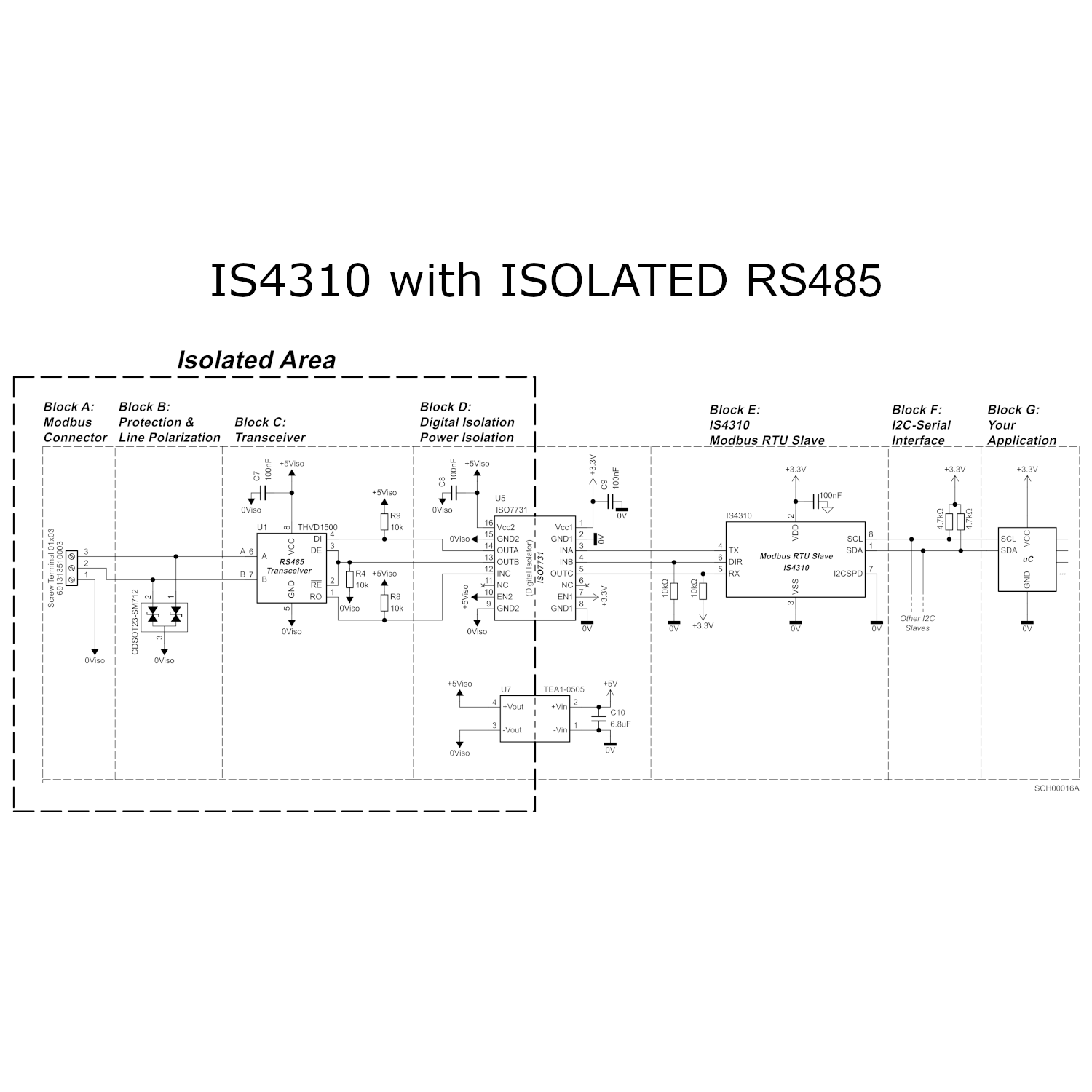
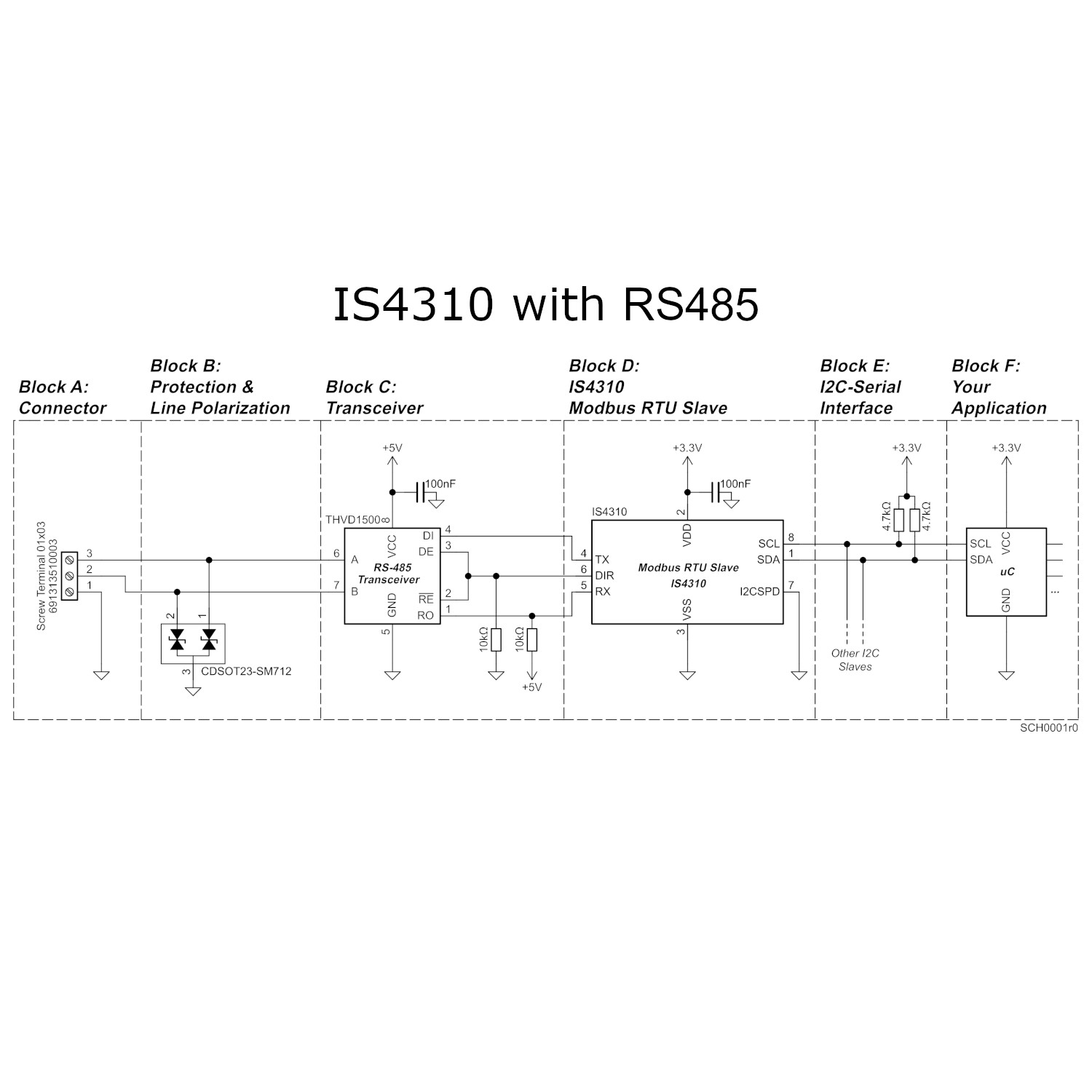
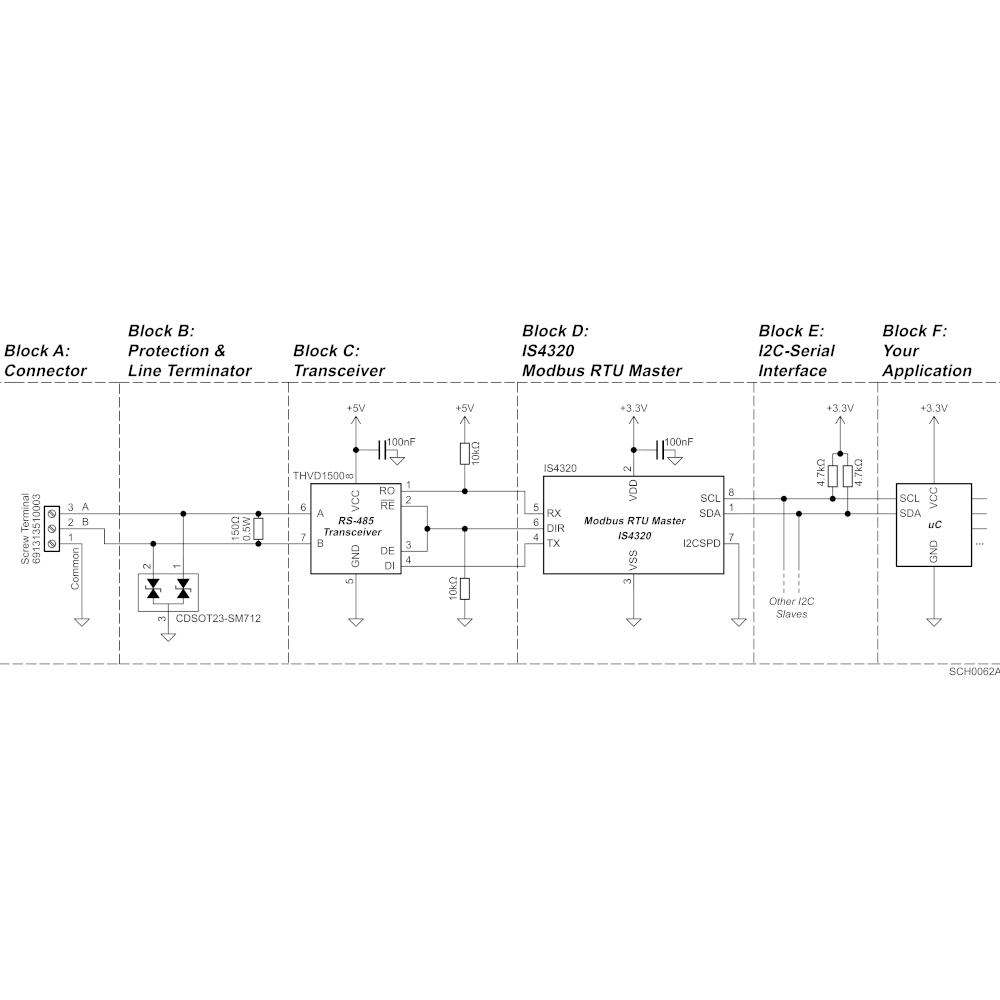
  • UART output to connect your preferred RS485 (or RS232, RS422) transceiver.
    ➜ This is the fieldbus that connects to a PLC, computer, or machine.

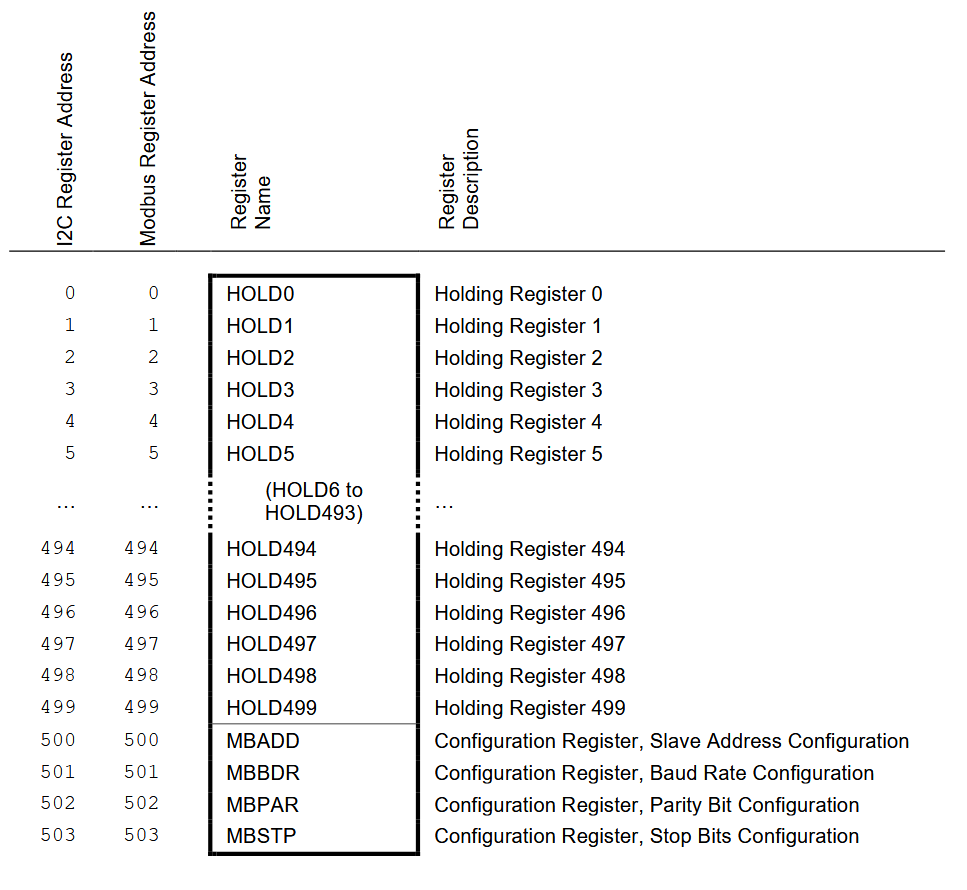
The internal memory is composed of 504 registers:

  • 500 Holding Registers for user data.
  • 4 Configuration Registers for communication settings: Modbus Slave ID, Baud Rate, Parity, Stop Bits.

Default Chip Settings

Default Modbus Settings:

  • Modbus Slave ID: 1
  • Modbus Baud Rate: 19200 bps
  • Modbus Parity: Even
  • Modbus Stop Bits: 1

Default I2C Settings:

  • I2C Slave Address: 0x11 (fixed)
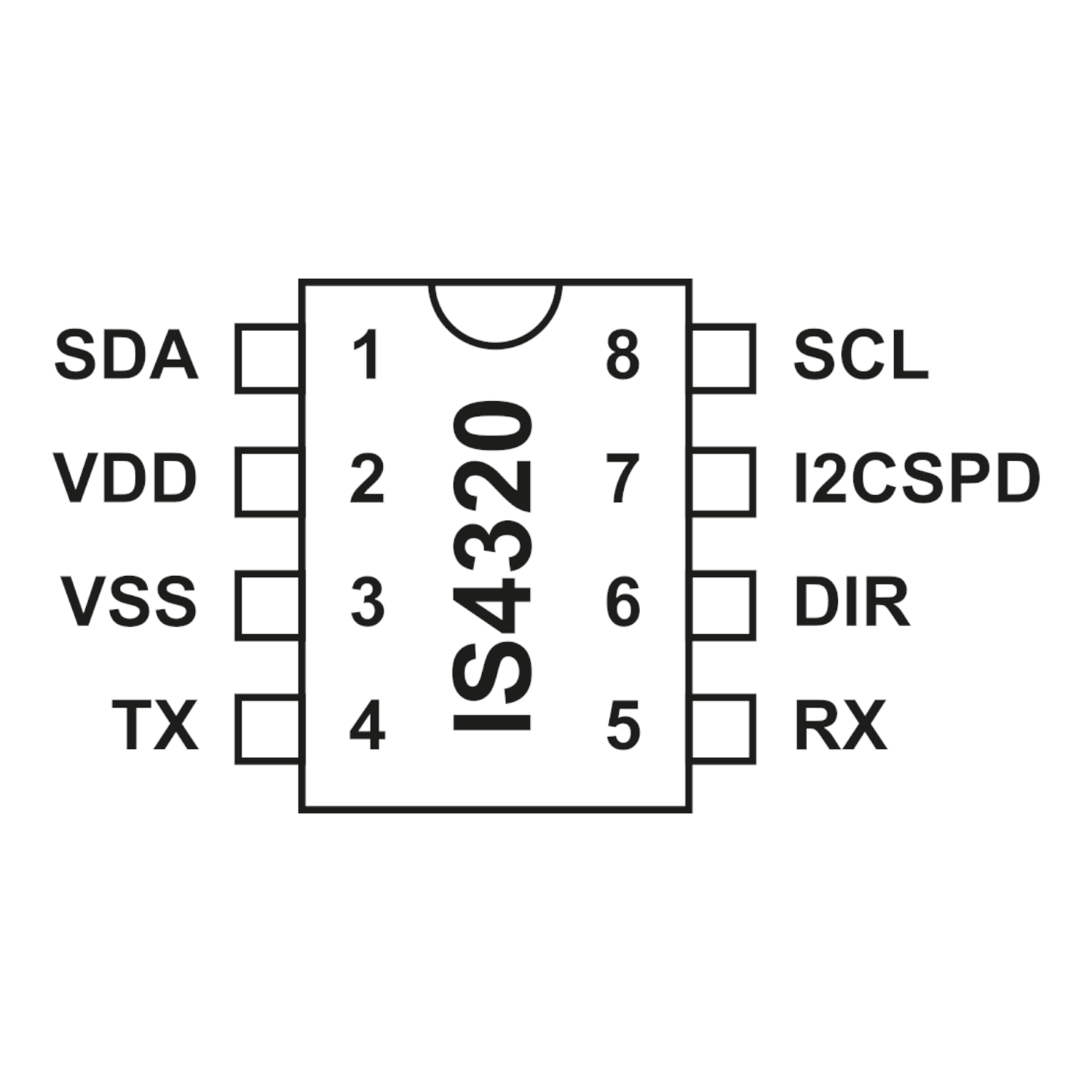
  • I2C Speed: Depends on pin 7: 100 kHz (pin 7 to GND), 400 kHz (pin 7 to 3.3V/2), 1 MHz (pin 7 to 3.3V)

Need an Evaluation Board?

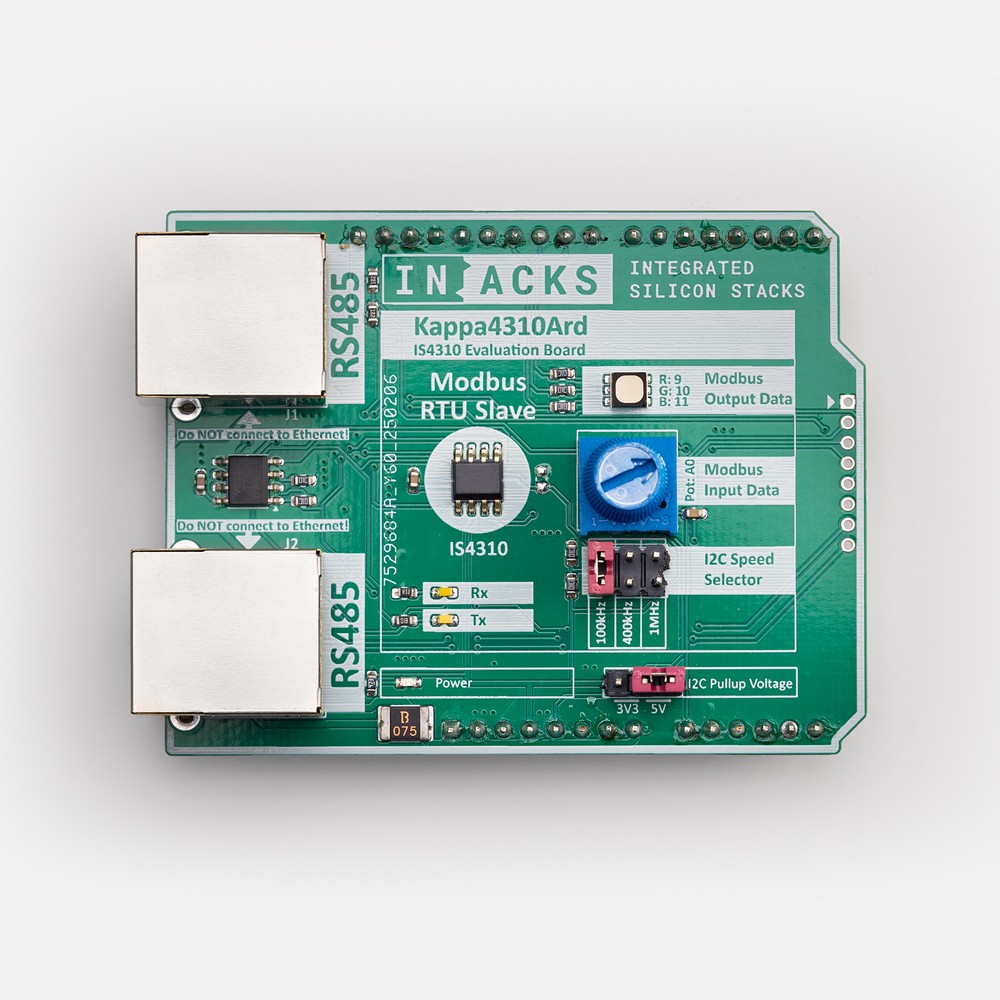
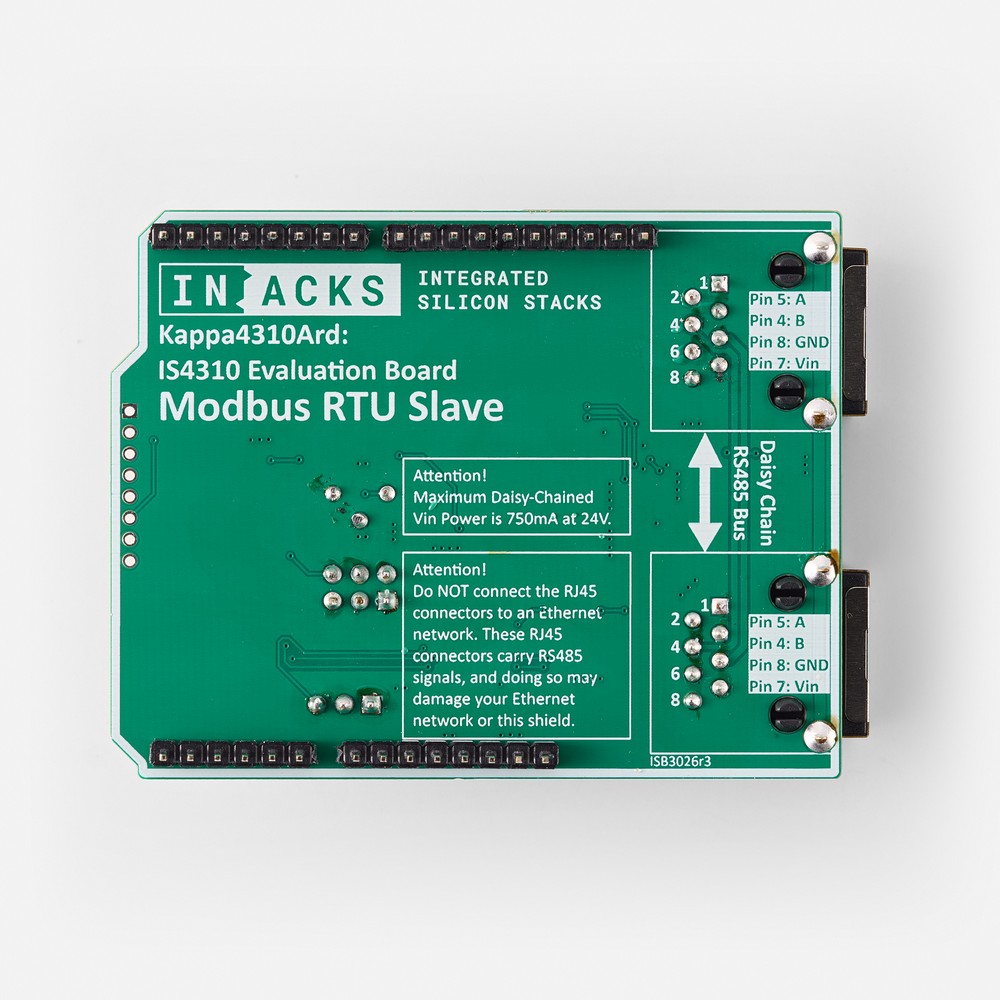
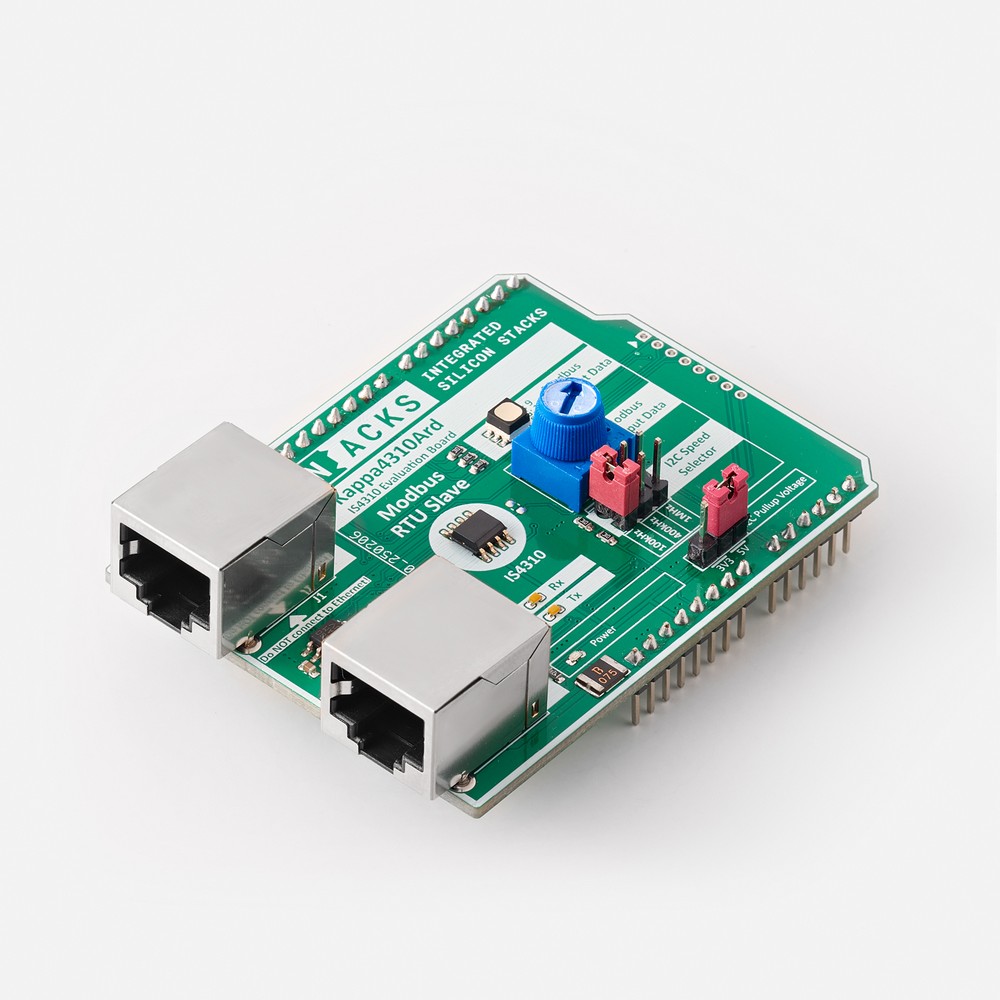
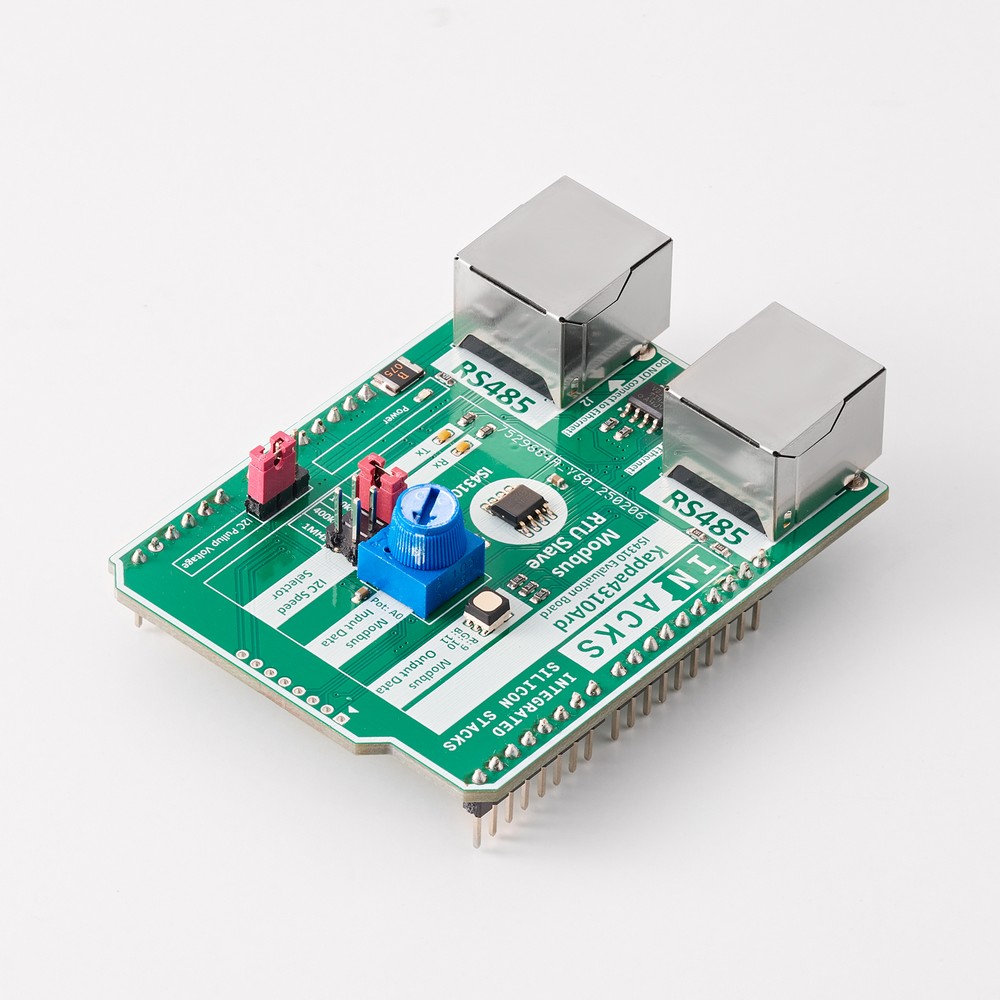
  • For Arduino and STM32 Nucleo Boards: Kappa4310Ard is an Arduino-form-factor evaluation board that lets you prototype and experiment with the Modbus chip IS4310 over RS485.
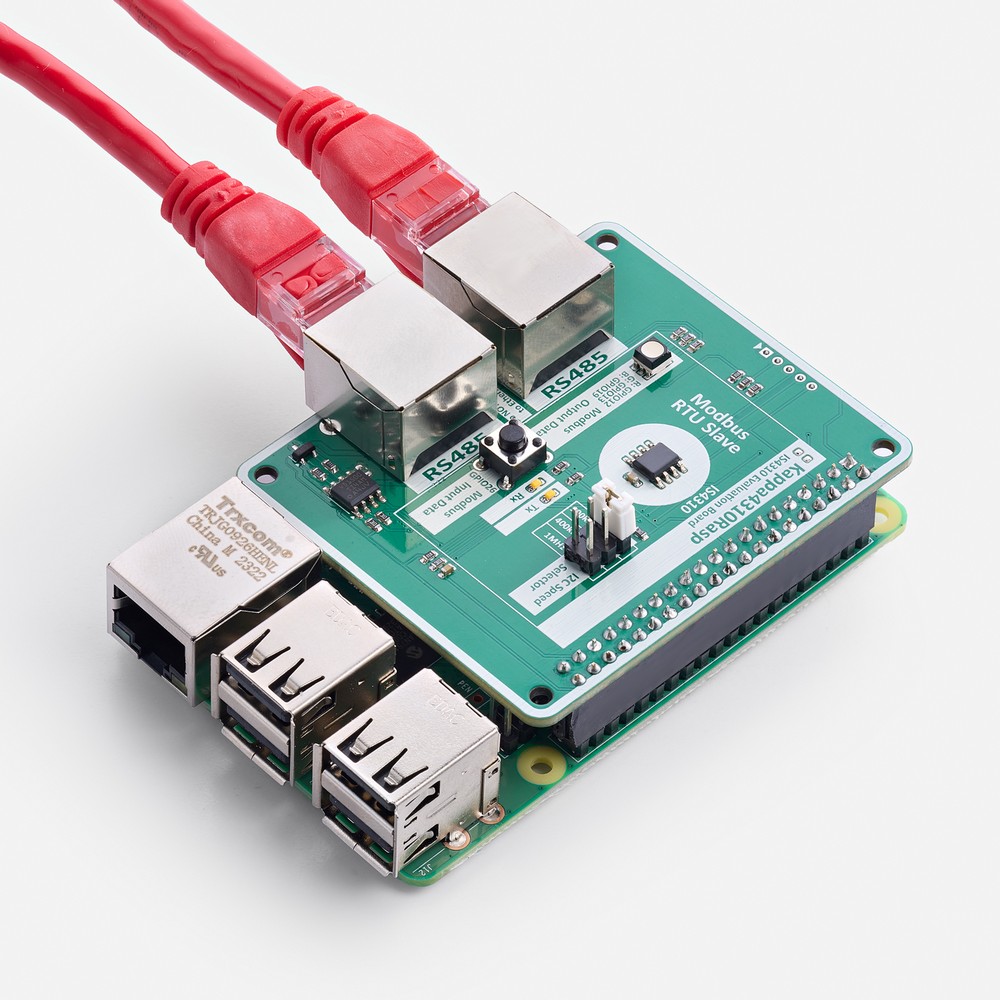
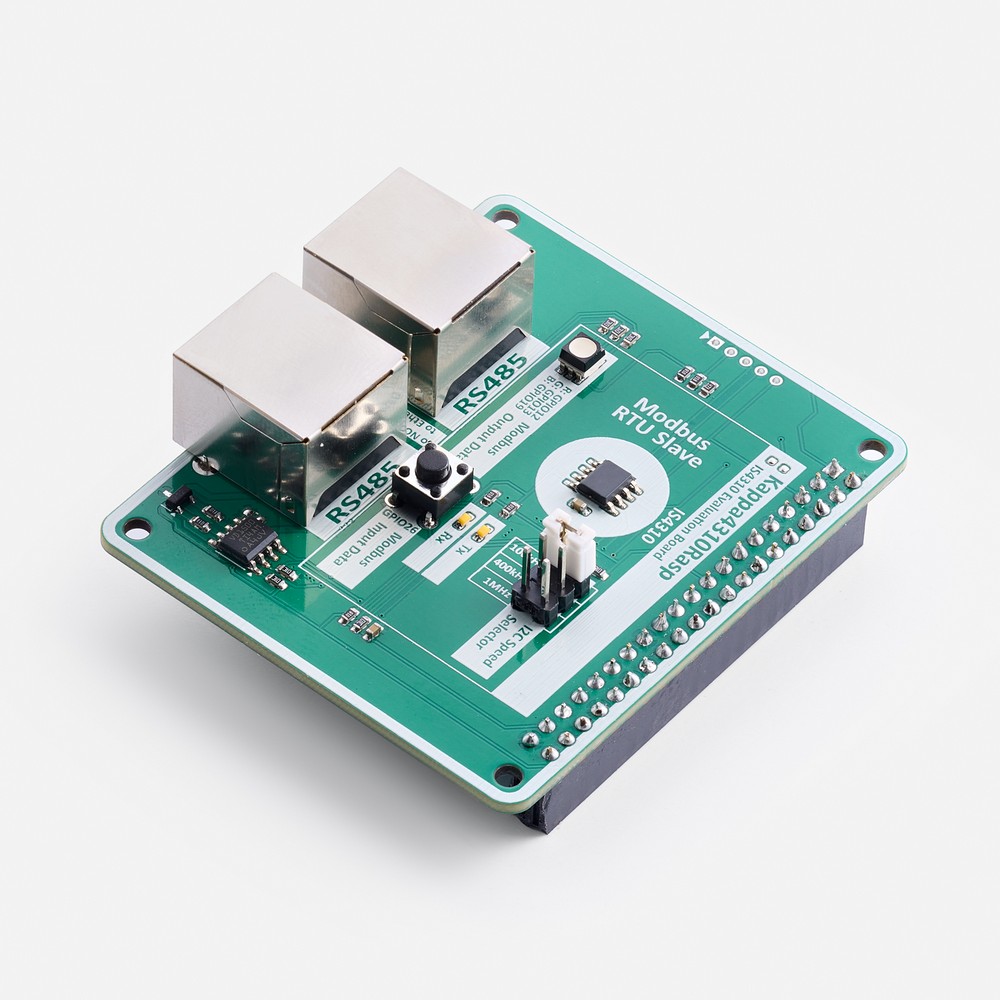
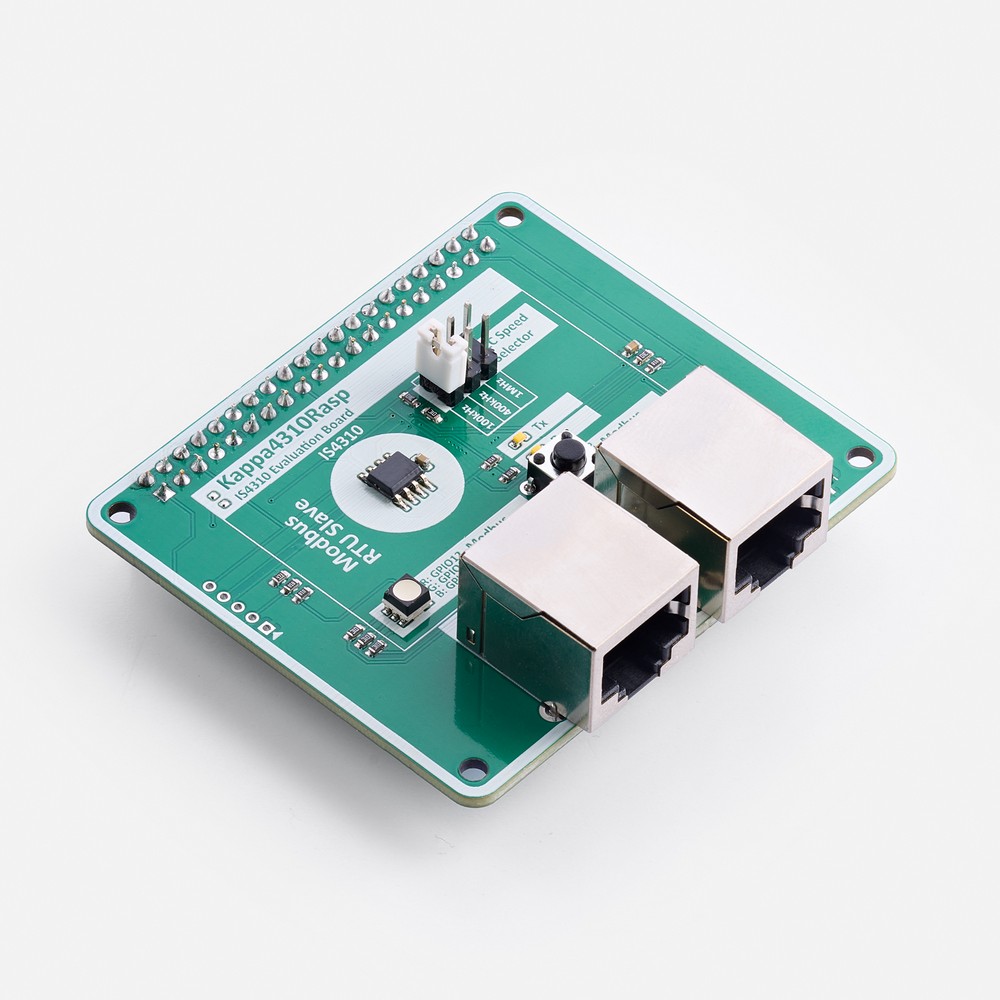
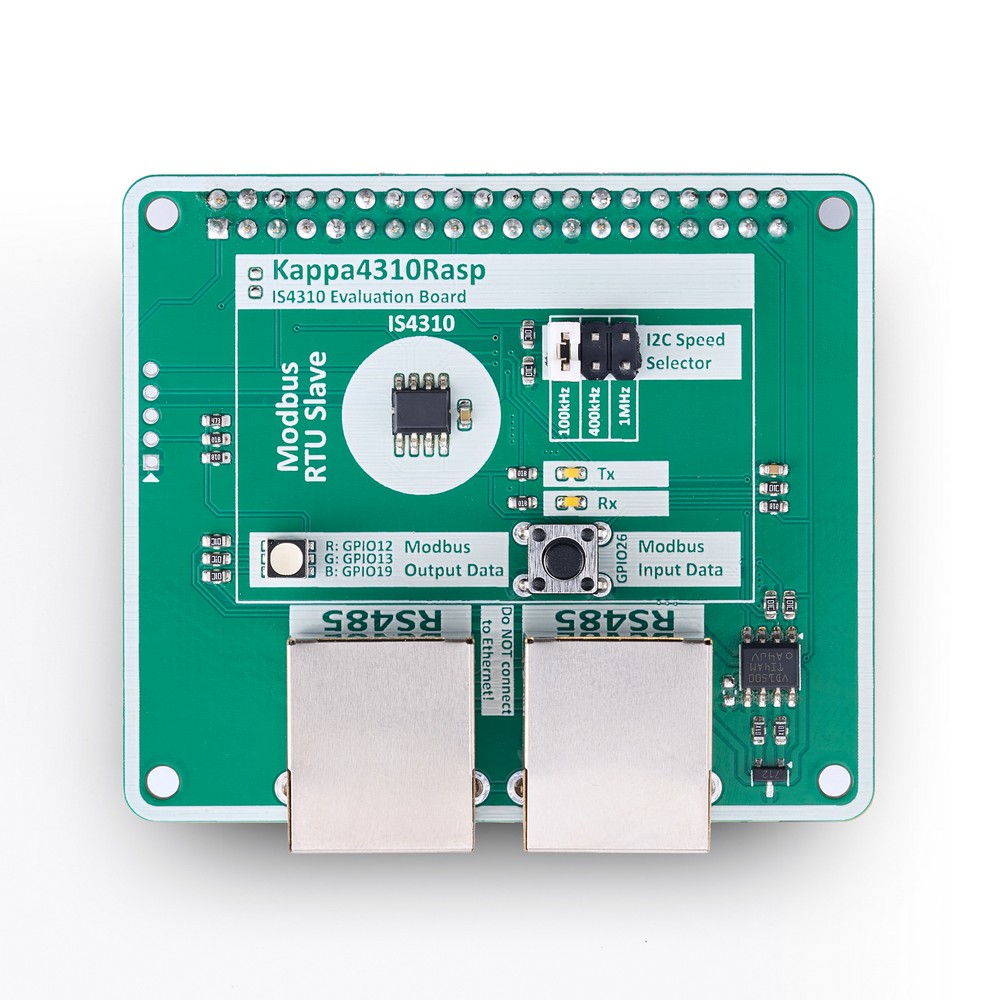
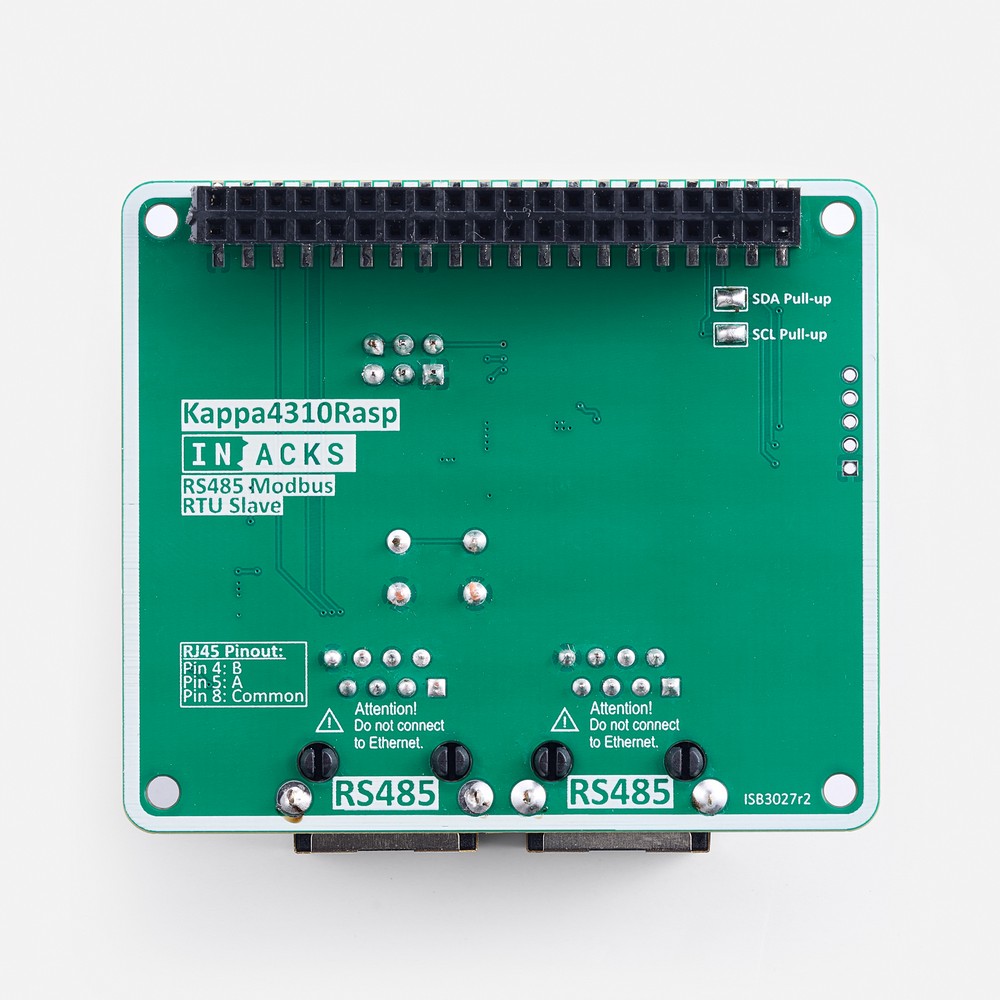
  • For Raspberry Pi and other single board computers: The Kappa4310Rasp is a Raspberry Pi-form-factor evaluation board that lets you prototype and experiment with the Modbus chip IS4310 over RS485. The IS4310 time deterministic stack allows a correct management of the T15 and T35 critical timings, that’s specially relevant on non-deterministic systems like computers.


This company and the products provided herein are developed independently and are not affiliated with, endorsed by, or associated with any official protocol or standardization entity. All trademarks, names, and references to specific protocols remain the property of their respective owners.

IS4310 I2C Modbus RTU Slave Chip Documentation

IS4310 I2C Modbus RTU Slave Chip Models

1. What is the IS4310 chip used for?

The IS4310 is a Modbus RTU Slave chip with 500 internal Holding Registers. It allows a microcontroller to communicate with industrial equipment (such as PLCs) without implementing any Modbus stack. Your MCU uses I2C, while the PLC communicates using UART with an RS485/RS232 transceiver.

2. Do I need to install any Modbus libraries to use the IS4310?

No. The IS4310 contains a full Modbus RTU Slave stack. Your microcontroller only reads and writes the Holding Registers over I2C. No Modbus code is required on your side.

3. Which Modbus function codes does the IS4310 support?

The chip supports the most commonly used Holding Register functions:

  • 0x03 – Read Holding Registers

  • 0x06 – Write Single Register

  • 0x10 – Write Multiple Registers

4. How do I configure the Modbus Slave ID, baud rate, or parity?

These parameters are stored in four dedicated Configuration Registers inside the chip. You simply write to these registers via I2C. On reset, the IS4310 loads your custom settings automatically.

5. Can I use the IS4310 as both a sensor and an actuator?

Yes. You can write data to the Holding Registers (sensor behavior), read data written by a PLC (actuator behavior), or use a mixed mode where your microcontroller both reads and writes depending on the application.

6. Does the IS4310 work with Arduino, STM32, ESP32, Raspberry Pi, or FPGAs?

Yes. Any device with an I2C interface can read and write the chip’s registers. The Modbus UART output can be used with any RS485/RS232 transceiver to connect to industrial devices.

Reviews

There are no reviews yet.

Only logged in customers who have purchased this product may leave a review.

Evaluation boards, Modules & other related products

Evaluation boards, modules, and accessories designed for fast prototyping and easy integration. Featuring standard interfaces and built-in transceivers, they simplify testing and development across platforms like Arduino, Nucleo, or Raspberry Pi. Ideal for adding RS485, RS232, or Ethernet functionality with minimal effort and maximum compatibility.

Have a question?

Fill out this field
Please enter a valid email address.
Fill out this field
You need to agree with the terms to proceed