



Mastering DMX512 Transmission via SPI and I2C
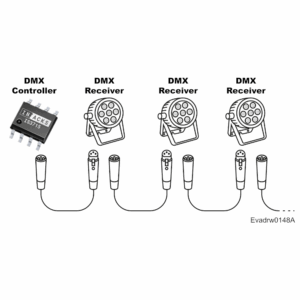
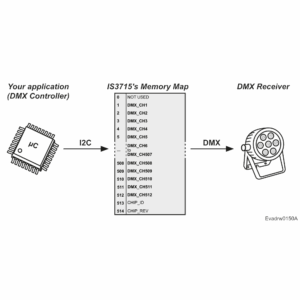
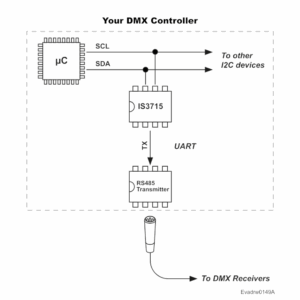
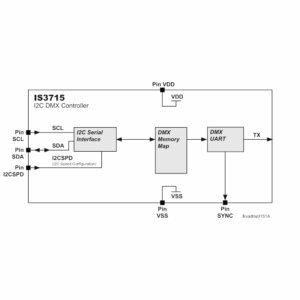
Generarting a compliant DMX512 signal requires precise timing and a specific baud rate of 250 kbps, which can be difficult to manage alongside other tasks on a microcontroller. This category features dedicated DMX512 controller chips designed to act as a bridge between your host processor and the lighting network. These components function as a DMX Master, accepting data through standard SPI or I2C interfaces. This allows your microcontroller to simply send lighting values using these common, low-overhead protocols, while the chip handles the rigorous physical layer generation, including the Break, Mark-After-Break, and start codes required by the standard.
Reducing Firmware Complexity for Lighting Systems
Developing a lighting controller usually involves writing complex interrupt-driven code to prevent signal jitter. INACKS integrated circuits and modules help a lot to develop products with this category because it avoids the firmware engineer to have to implement by itself the protocol, therefore there are less costs, and product can be ended sooner. By offloading the DMX512 generation to a dedicated hardware peripheral accessed via SPI or I2C, you eliminate the need for bit-banging or specialized UART configurations. This ensures that your device maintains perfect compatibility with professional lighting fixtures while allowing your engineering team to focus on the application logic rather than signal timing.
Check Other Lighting Protocol Chips
Addressable LED | DMX512 Controller | DMX512 Receiver | RDM+DMX Controller | RDM+DMX Responder | Art-Net Controller | Art-Net Receiver